The Ada Initiative’s sunset

This morning, the Ada Initiative, which I co-founded in 2011 and have been employed by between 2011 and now, announced our shutdown.

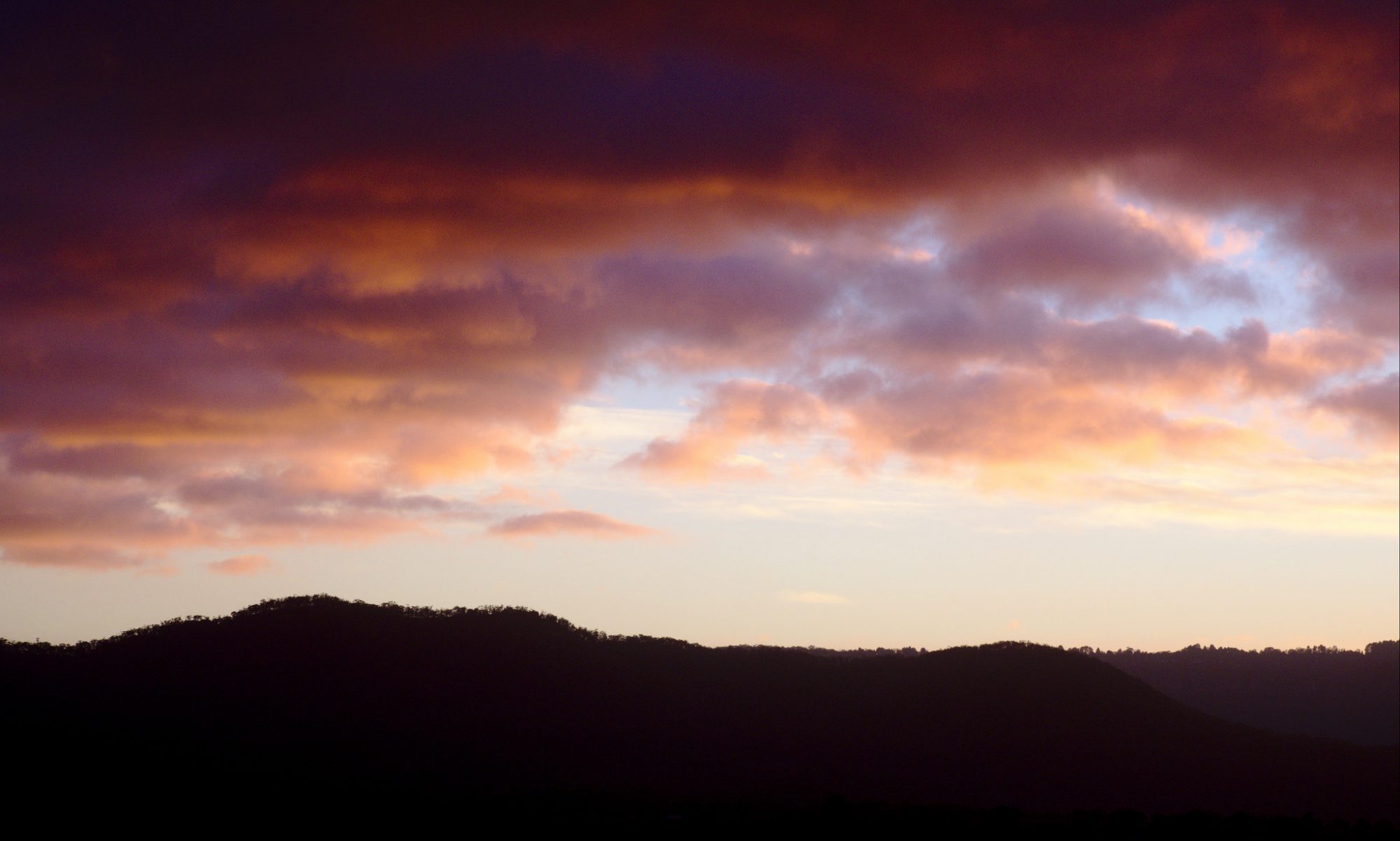
Sunset over San Francisco, original by  Nan Palmero
Sunset over San Francisco, original by
Nan Palmero

I’m proud of all the work we talked about in the announcement, but a few things of mine over the years in particular that I enjoyed doing a lot and that I hope will have a continuing impact:

AdaCamp. AdaCamp Melbourne was my idea, and was, for me, something of a followup to the LinuxChix/Haecksen miniconfs I founded in 2007, but, as we had done with the Ada Initiative, decoupled from the Linux community specifically, and explicitly feminist and incorporating what I’d learned from organizing earlier women’s events and meetups. It grew into much more over time, incorporating ideas from other events like quiet rooms and inclusive catering, and solving problems that plagued the events that all of the Ada Initiative staff and AdaCamp staff had been to over the years.

The guide to responding to harassment reports as an event organizer. This was based on a email I wrote to a conference organizer who was wondering what one actually does when a harassment report comes in, which, as I tend to do with my best emails, I later edited to put on the web. The wiki text has been somewhat edited and expanded of course, but is substantially similar to my initial version. It formed the basis of the enforcement manual that PyCon developed.

The AdaCamp Toolkit. I wrote more than half of this in the month between closing the AdaCamp program and launching the Toolkit, and edited the remainder from material developed internally. Not since the Geek Feminism wiki have I had so much (rather intense) fun emptying the contents of my head onto a website.

The Impostor Syndrome Training and our Impostor Syndrome Proofing article. AdaCampers had been discussing Impostor Syndrome since the event in Melbourne. I developed the version given at AdaCamps from Portland onwards, and which I will teach in Sydney shortly, built up around an exercise developed by Leigh Honeywell for AdaCamp SF, and we’re releasing it publicly after the Sydney workshop.

I also did a great deal of the behind the scenes project management and technical work (web work, systems administration, payments processing setup) throughout the life of the organization, and internally my documents are the core of our institutional knowledge. (I am hoping to edit a few of the fundraising documents for publication this month.) Valerie’s life will never be the same again now that everything goes in a spreadsheet. I am hoping I can offer my project management skills to another organization soon.

There’s a lot of smaller things that I would never have without the Ada Initiative, like quite good double-entry bookkeeping skills, passable knowledge of Javascript, and too much knowledge of US non-profit tax law.

Thank you to Valerie Aurora, my friend and co-founder, who made a very unlikely and very lucky gamble on me four and a half years ago. Without Valerie the Ada Initiative could never have existed in the first place and would never have had the vision or the conviction to do 95% of what it did. I’m in San Francisco right now, my last trip for the Ada Initiative, so that we could do this last thing together and go out leaving as much for the community to use as possible.

Thank you to the many many people who worked and volunteered for us over the last four and a half years, who came to our events, who donated, and who advocated for, amplified, and improved our work.

As for what’s up next, I’ll be at the Ada Initiative for another couple of months. During that time, if this sentence of our shutdown notice was of interest, let’s talk:

Mary will be looking for a new position based in Sydney, Australia, working in a leadership role with the right organization.

Sunrise in Sydney, original by Tom French

Image credits:

Nan Palmero, You Heading to Oakland or Space?, CC BY, cropped and colour adjusted by the author of this post.
Tom French, Harbour Sunrise, CC BY, cropped and colour adjusted by the author of this post.

Blogging for Geek Feminism, a short history

With yesterday’s release of Spam All the Links, I’ve finished my long awaited project of departing the Geek Feminism blog.

I was involved in the blog on, if not from the first day of its existence, at least from the first week of it. My involvement in the blog was huge, and comprises among other things:

  • over 200 posts to the blog
  • founding and for a long time running the Ask a Geek Feminist, Wednesday Geek Woman and Cookie of the Week series
  • doing a linkspam post by myself multiple times a week for about a year
  • recruiting the initial team of Linkspammers and setting up their manual, mailing list and of course, the script that supports them
  • recruiting several other bloggers, including Tim, Restructure! and Courtney S
  • a bunch of sysadmin of the self-hosted WordPress install (it’s now hosted on WordPress.com)

My leaving the blog is delayed news. I initially told the co-bloggers I was leaving close to a year ago now (mid-August, if I’d waited much longer on writing this I could have posted on the one year anniversary), because my output had dried up. I feel in large part that what happened was that I spent about ten years in geekdom (1999–2009) accumulating about three years of material for the blog, and then I ran out of things to write about there. I also have two more children and one more business than I had when I was first writing for it, and, very crucially, one less unfinished PhD to avoid. But I had a handover todo list to plod my way through, and Spam All the Links was the last item on it!

I remain involved in Geek Feminism as an administrator on the Geek Feminism wiki, on which I had about 25% of total edits last I looked, although the same sense of being a dry well is there too.

The blog was obviously hugely important for me, both as an outlet for that ten years of pent up opinionating and, to my surprise, because I ended up moving into the space professionally. I’m glad I did it.

Today, I would say these are my five favourite posts I made to the blog:

“Girl stuff” in Free Software, August 2009 (original link):

Terri mention[ed] that she had resisted at times working on things perceived as ‘girl stuff’. In Free Software this includes but is not limited to documentation, usability research, community management and (somewhat unusually for wider society) sometimes management in general. The audience immediately hit on it, and it swirled around me all week.

Why we document, August 2009 (original link):

I do not in fact find writing the wiki documentation of incidents in geekdom very satisfying. The comment linked at the beginning of the post compared the descriptions to a rope tying geekdom to the past. Sometimes being known as a wiki editor and pursued around IRC with endless links to yet another anonymous commenter or well-known developer advising women to shut up and take it and write some damned code anyway is like a rope tying me to the bottom of the ocean.

But what makes it worth it for me is that when people are scratching their heads over why women would avoid such a revolutionarily free environment like Free Software development, did maybe something bad actually happen, that women have answers.

(I’d be very interested in other people’s takes on this in 2015, which is a very different landscape in terms of the visibility of geek sexism than 2009 was.)

Why don’t you just hit him?, December 2010 (original link):

This is the kind of advice given by people who don’t actually want to help. Or perhaps don’t know how they can. It’s like if you’re a parent of a bullying victim, and you find yourself repeating “ignore it”, “fight back with fists” or whatever fairly useless advice you yourself were once on the receiving end of. It’s expressing at best helplessness, and at worst victim-blaming. It’s personalising a cultural problem.

You are not helpless in the face of harassment. Call for policies, implement policies, call out harassment when you overhear it, or report it. Stand with people who discuss their experiences publicly.

Anti-pseudonym bingo, July 2011 (original link):

Let’s recap really quickly: wanting to and being able to use your legal name everywhere is associated with privilege. Non-exhaustive list of reasons you might not want to use it on social networks: everyone knows you by a nickname; you want everyone to know you by a nickname; you’re experimenting with changing some aspect of your identity online before you do it elsewhere; online circles are the only place it’s safe to express some aspect of your identity, ever; your legal name marks you as a member of a group disproportionately targeted for harassment; you want to say things or make connections that you don’t want to share with colleagues, family or bosses; you hate your legal name because it is shared with an abusive family member; your legal name doesn’t match your gender identity; you want to participate in a social network as a fictional character; the mere thought of your stalker seeing even your locked down profile makes you sick; you want to create a special-purpose account; you’re an activist wanting to share information but will be in danger if identified; your legal name is imposed by a legal system that doesn’t match your culture… you know, stuff that only affects a really teeny minority numerically, and only a little bit, you know?

But I’m mostly listing it here because I always have fun with the design of my bingo cards. (This was my first time, Sexist joke bingo is better looking.)

I take it we aren’t cute enough for you?, August 2012 (original link):

… why girls? Why do we not have 170 comments on our blog reaching out to women who are frustrated with geekdom? I want to get this out in the open: people love to support geek girls, they are considerably more ambivalent about supporting geek women.

The one I’m still astonished I had time for was transcribing the entire Doubleclicks “Nothing to Prove” video. 2013? I don’t remember having that kind of time in 2013!

Thanks to my many co-bloggers over the five years I was a varyingly active blogger at Geek Feminism. I may be done, at least for a time and perhaps in that format, but here’s to a new generation of geek feminist writers joining the existing one!

Hand holding aloft a cocktail glass
from an image by Susanne Nilsson, CC BY-SA
Image credit: Cheers! by Susanne Nilsson, Creative Commons Attribution-Sharealike. The version used in this post was cropped and colour adjusted by Mary.

Code release: Spam All the Links

The Geek Feminism blog’s Linkspam tradition started back in August 2009, in the very early days of the blog and by September it had occurred to us to take submissions through bookmarking services. From shortly after that point there were a sequence of scripts that pulled links out of RSS feeds. Last year, I began cleaning up my script and turning it into the one link-hoovering script to rule them all. It sucks links out of bookmarking sites, Twitter and WordPress sites and bundles them all up into an email that is sent to the linkspamming team there for curation, pre-formatted in HTML and with title and suggestion descriptions for each link. It even attempts to filter out links already posted in previous linkspams.

The Geek Feminism linkspammers aren’t the only link compilers in town, and it’s possible we’re not the only group who would find my script useful. I’ve therefore finished generalising it, and I’ve released it as Spam All the Links on Gitlab. It’s a Python 3 script that should run on most standard Python environments.

Spam All the Links

Spam All the Links is a command line script that fetches URL suggestions from
several sources and assembles them into one email. That email can in turn be
pasted into a blog entry or otherwise used to share the list of links.

Use case

Spam All the Links was written to assist in producing the Geek Feminism linkspam posts. It was developed to check WordPress comments, bookmarking websites such as Pinboard, and Twitter, for links tagged “geekfeminism”, assemble them into one email, and email them to an editor who could use the email as the basis for a blog post.

The script has been generalised to allow searches of RSS/Atom feeds, Twitter, and WordPress blog comments as specified by a configuration file.

Email output

The email output of the script has three components:

  1. a plain text email with the list of links
  2. a HTML email with the list of links
  3. an attachment with the HTML formatted links but no surrounding text so as to be easily copy and pasted

All three parts of the email can be templated with Jinja2.

Sources of links

Spam All the Links currently can be configured to check multiple sources of links, in these forms:

  1. RSS/Atom feeds, such as those produced by the bookmarking sites Pinboard or Diigo, where the link, title and description of the link can be derived from the equivalent fields in the RSS/Atom. (bookmarkfeed in the configuration file)
  2. RSS/Atom feeds where links can be found in the ‘body’ of a post (postfeed in the configuration file)
  3. Twitter searches (twitter in the configuration file)
  4. comments on WordPress blog entries (wpcommentsfeed in the configuration file)

More info, and the code, is available at the Spam All the Links repository at Gitlab. It is available under the MIT free software licence.

The glorious 25th of May

This article originally appeared on Hoyden About Town.

The scent rolled over him.

He looked up.

Overhead, a lilac tree was in bloom.

He stared.

Damn! Damn! Damn! Every year he forgot. Well, no. He never forgot. He just put the memories away, like old silverware that you didn’t want to tarnish. And every year they came back, sharp and sparkling, and stabbed him in the heart.

Night Watch, Terry Pratchett, 2002

Lilac blooms with the sun shining through them
Lilac, photo by MattysFlicks@Flickr CC BY

The Hitch Hiker’s Guide to the Galaxy has a few things to say on the subject of towels.

A towel, it says, is about the most massively useful thing an interstellar hitch hiker can have[…] a towel has immense psychological value. For some reason, if a strag (strag: non-hitch hiker) discovers that a hitch hiker has his towel with him, he will automatically assume that he is also in possession of a toothbrush, face flannel, soap, tin of biscuits, flask, compass, map, ball of string, gnat spray, wet weather gear, space suit etc, etc. Furthermore, the strag will then happily lend the hitch hiker any of these or a dozen other items that the hitch hiker might accidentally have ‘lost’. What the strag will think is that any man who can hitch the length and breadth of the galaxy, rough it, slum it, struggle against terrible odds, win through, and still know where his towel is is clearly a man to be reckoned with.

The Hitchhiker’s Guide to the Galaxy, Douglas Adams, 1979

Photograph of a towel draped over an arm, with a thumb up to hitch a ride
Have towel, will travel, photo by Kreg Steppe@Flickr CC BY-SA

Vetinari [said:] “As one man to another, commander, I must ask you: did you ever wonder why I wore the lilac?”

“Yeah, I wondered,” said Vimes.

“But you never asked.”

“No, I never asked,” said Vimes shortly. “It’s a flower. Anyone can wear a flower.”

“At this time? In this place?”

Night Watch, Terry Pratchett, 2002

Photograph of German editions of The Hitch Hikers Guide to the Galaxy and Night Watch, together with a lilac towl and a sprig of lilac
Remembering Douglas Adams and Terry Pratchtett, photo by Gytha69@Flickr, CC BY

Remembering Douglas Adams (1952–2001) and Terry Pratchett (1948–2015), both of whose work meant a lot to me at various times.


Image credits:

Lilacs, lighting and lens flare by MattysFlicks on Flickr, Creative Commons Attribution.

Thumbs up by Kreg Steppe on Flickr, Creative Commons Attribution-Sharealike.

25.Mai Towel Day- Handtuchtag in Gedenken an den genialen Schriftsteller Douglas Adams (1952-2001) und ‘Wear a lilac if you were there day- Trag Flieder, wenn Du dabei warst- Tag im Gedenken an die Glorreiche Revolution in Ankh-Morpork by Gytha69 on Flickr, Creative Commons Attribution, cropped and colour adjusted by the author of this post.

Photo circle shots

I recently ran a “photo circle”, consisting of a small group of people sending prints of their own photographs to each other. It was a fun way to prod myself to take non-kid photos.

My four photos were:

Photo circle: sun in the eucalypts

I took Sun in the eucalypts in the late afternoon of Easter Sunday, as the sun was sinking behind the eucalypts at Centennial Park’s children’s bike track. I tried to take one with the sun shining through the trees but didn’t get the lens flare right. I like the contrast between the sunlit tree and the dark tree in this one. It feels springlike, for an autumn scene.

The other three are a very different type of weather shot, taken during Sydney’s extreme rainfall of late April and very early May:

Photo circle: rainstorm

This one has the most post-processing by far: it was originally shot in portrait and in colour. I was messing around with either fast or slow shutter speeds while it poured with rain at my house; I have a number of similar photos where spheres of water are suspended in the air. None of them quite work but I will continue to play with photographing rain with a fast shutter speed. In the meantime, the slow shutter speed here works well. I made the image monochrome in order to make the rain stand out more. In the original image the green tree and the rich brown fencing and brick rather detract from showing exactly how rainy it was.

Photo circle: Sydney rain storm

This was shot from Gunners’ Barracks in Mosman (a historical barracks, not an active one) as a sudden rainstorm rolled over Sydney Harbour. The view was good enough, but my lens not wide enough, to see it raining on parts of the harbour and not on other parts. All the obscurity of the city skyline in this shot is due to rain, not fog.

Photo circle: ferry in the rain

This is the same rainstorm as the above shot; they were taken very close together. It may not be immediately obvious, but the saturation on this shot is close to maximum in order to make the colours of the ferry come up at all. I was the most worried about this shot on the camera, it was very dim. It comes up better in print than on screen, too. The obscurity is again entirely due to the rain, and results in the illusion that there is only one vessel on Sydney Harbour. Even in weather like this, that’s far from true. I felt very lucky to capture this just before the ferry vanished into the rain too.

Quick links: nothing to hide

This article originally appeared on Hoyden About Town.

Data retention is coming to Australia very soon.

[Data retained] includes your name, address and other identifying information, your contract details, billing and payment information. In relation to each communication, it includes the date, start and finish times, and the identities of the other parties to the communication. And it includes the location data, such as the mobile cell towers or Wi-Fi hotspots you were accessing at the time…

But surely they’ve included special protections for communications between doctors and patients, and lawyers and clients? No. Never even discussed…

The Joint Committee recommended that the Act be amended to ensure that the metadata can’t be obtained by parties in civil litigation cases (I’ve mentioned before how excited litigation lawyers will be about all this lovely new data), and George Brandis said that would be fixed in the final amendments. But it isn’t there. The final Bill being bulldozed through Parliament right now contains no such protection. The fact remains that, under the Telecommunications Act, one of the situations in which a service provider cannot resist handing over stored data is when a court has required it by issuing a subpoena. In practice, that means that your ex-spouse, former business partners, suspicious insurance company or employer can get hold of a complete digital history of your movements and communications for the past two years, and use it against you in court.

Michael Bradley, Our privacy is about to be serially infringed, The Drum, March 19 2015

Surveillance cameras attached to a building exterior
Surveillance, by Jonathan McIntosh@Flickr CC BY-SA

Noted elsewhere: all this data will be stored by various companies with varying degrees of security awareness, so in practice it will sometimes be available to some criminals too.

Elsewhere:


Image credit: Surveillance by Jonathan McIntosh, Creative Commons Atttribution-Sharealike

In memoriam: Terry Pratchett, and a Discworld reading history

This article originally appeared on Hoyden About Town.

A fussy baby woke me at 5am and I found that the news of Terry Pratchett’s death came overnight.

Hoyden About Town has had several previous threads on Pratchett’s work: Belated Friday Hoydens: The Witches of Lancre, Gratuitous Pratchett Appreciation thread: Crivens!, Sunday Series: Discworld and it’s hard to work out what to say on top. Perhaps my own me-and-Pratchett-novels stories will need to do.

I was aware of Pratchett for as long as I can remember, because I was a teenager in the 1990s and he had a good amount of shelf space in my local mainstream book store, but the Josh Kirby cover era was always instinctively offputting to me as a teenager and into adulthood. I never got so far as consciously thinking “should I read Pratchett?” I thought it was clear from the covers that it was bawdy humour aimed to men, not one of my genres. So it took two pushes to read him: the first was a recommendation from a friend and the second was a recommendation from a friend that happened to take place on a camping trip in 2000 to which I hadn’t brought enough books. (I love me some ebook era, but I think transmission of Pratchett fandom would now be less likely in such circumstances.)

The book in question, because it happened to be there in someone’s bag, was Hogfather, which as I wrote in 2012 is not a bad introduction to Discworld in that it’s fairly self-contained and has a pretty comprehensive drill into the way magic and divinity work on the Disc. Its main failing was that it meant I hoped for a while that Susan Sto Helit was the main character in all the novels. (I didn’t end up really liking any of her other novels, eg the writer M is correct about Susan in Soul Music, although I think the portrayal of the immature rationality-supremacist geek girl was intentional!)

I then read many of the Discworld books in whatever order I came across them in my friends’ libraries (the ebook era would win here!), so I met the witches about halfway through in Lords and Ladies and was perpetually disappointed that it turned out to be about halfway through. I always wanted to know the end of Magrat’s story, when she finally, inevitably (in my opinion!) outgrows Granny and they both know it. (Apparently I always trust the designated irritating woman to grow up to win.) And what will Esmerelda the Younger become?

But, despite being a Hoyden, my heart ended up in Ankh-Morpork, in the Watch subseries which I happily read in more or less publication order. Honestly, partly this is because Vetinari is a ridiculous trope who just happens to be one of my very favourite ridiculous tropes in the entire world, but it’s also because Pratchett took his frustrating and increasingly sidelined comic sidekicks, went back in time, wrote a novel largely about men doing heroic man things with one of his favourite creations in the rescuer role, niggled at me politically a couple of times in a way he normally doesn’t, and made it the heart of the series for me anyway: Night Watch, the first Pratchett I believe I bought in hardback, and what a good choice that was.

It isn’t yet the glorious 25th of May, I’m in the wrong hemisphere, and there’s no lilac anywhere near me in any case. But it will always be the image that comes to mind when I remember the heart of Terry Pratchett’s work to me.


Here’s a few Pratchett links worth visiting today:


Featured image credit: Lilacs, lighting and lens flare by MattysFlicks on Flickr, CC BY.

The Sydney Project: Wild Ground

This entry is part 11 of 11 in the series The Sydney Project

Last year was my sonÂ’s last year before he began full time schooling in 2015. I have spent the last year reviewing child-focussed activities in Sydney as “The Sydney Project”. Because V has begun school, the Sydney Project is concluding here with an activity he went to with Andrew in January. You can view previous entries throughout 2014 and early 2015.
Wild Ground

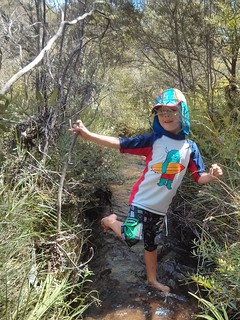
In mid-January, Andrew took V to a Wild Ground experience morning. Wild Ground is a new Blue Mountains business that conducts “creative nature-play” activities, and V had a morning adventure courtesy of us supporting their crowdfunding campaign to launch the business (see disclosure at the end). The event was at Minnehaha Falls Reserve; they began in the park with some singing and music before walking down the trail to a creek. Wild Ground’s Rick Webb laid out some “treasure” (coloured sticks) on the trail to encourage the kids to look around; they collected both the coloured treasure and anything else of interest.

Wild Ground art

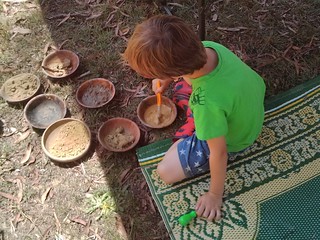
The group walked further down the trail to a small watering-hole and then back up the creek itself; Andrew was taken with the lesson here about micro-geography (I guess you’d say), I’m not sure if that was deliberate. After returning to the top the kids snacked on fruit and had a chance to try slacklining and did some crafts with natural paints. Andrew says that V initially mistook the slackline for a finish line and thus had to enact a spontaneous running race, but that he was also the child who was most into the slacklining proper, which otherwise got a bit of a mixed reception from the children.

V fell asleep in the car on the way home, Andrew summarises as “Outdoor activity that wears kids out. Tick!” He didn’t think that V was enchanted with or overwhelmed by the experience, but that it was a fun day outside for them both.

Cost: an equivalent experience doesn’t seem to be available now that the crowdfunding is over. Wild Ground’s Creative Bush Adventures for older children are $60, and term-long Bush School programs start at $115.

Recommended: a bit hard to say, since I don’t think this precise program is an ongoing part of their activities. But it suggests their programs would generally be a happy and interesting day for children.

More information: Wild Ground website.

Disclosure: Andrew and I have known Danielle Carey, one of the Wild Ground founders, since university. I supported the Wild Ground crowdfunding at the Little Adventurer level, and V’s Wild Ground experience was part of the Little Adventurer reward. No review was requested in return for the experience.

What it was like to have a newborn

I promised a friend I would answer this question: What do you spend all that time on, when you have a newborn?

Let me start with my general philosophy of learning to baby parent, which is to read people’s baby parenting blogs. Especially really funny, wise or kind people. For example, you could do worse than read… basically Julia’s entire blog, or Rivka’s blog from the start of her first, second or third pregnancies (warning: the second one miscarried). Or Yatima’s birth story.

Something I was told a lot before I had babies was that nothing prepares you for what it is like, and actually, I didn’t find that to be so. Mothers’ stories prepared me for what it is like. Plus, great writing.

The other very useful thing I did was to attend a private birth and early parenting course taught by Renee Adair of the Australian Doula College and specifically for the purposes of this entry she drew a clock face covering 24 hours, marked out (provisionally) the time between 1am and 5am as “hopefully baby’s long sleep if you’re lucky”, and divided the rest up into three hour chunks: nursing and baby care, baby sleeps. Three hours is up, start again. And that’s the first six to twelve weeks of a baby’s life.

Spending a couple of days or more in a birth/baby care class can be worth it, I think.

The major mistake I made was knowing so much about the early weeks of a baby’s life that I didn’t realise that this phase is temporary and so instead of checking out of life to the extent that I would have been allowed, I forced myself to be out of the house walking around and doing errands and such because this is the new normal, princess. (Spoiler: no it isn’t, older babies are really different.)

Note that I am only covering things that happened to me in this entry. So there’s, eg, no pumping or otherwise trying to bring up a low milk supply, because my problem was oversupply rather than under. There’s no prematurity care, or post-Caesarean recovery. Do read more than one story.

Nursing

Damn, this took up some time. It is worth noting that my feeding sessions were a lot faster than many mothers. A newborn can feed for an hour in many mother-baby relationships, rather than my babies’ five to fifteen minutes of hovering by the milk jetstream.

Learning to breastfeed. My babies had the rooting and suckling instincts at birth, but that’s not the same as being able to pop them on and wander around freely first thing. There’s a lot of looking and fiddling and puzzling over positions.

Dealing with the pain of breastfeeding. The first two weeks of nursing my first baby were painful. Me nursing involved getting my husband to be nearby and applying pain to some other part of my body to distract me, and hissing as I felt my nipple go stretch-stretch-stretch until it was sucked into place.

Second baby didn’t hurt, but I spent some time anticipating that it would!

Breastfeeding in low light. Newborns can’t hold their heads up. So breastfeeding them at all involved holding their head in the vicinity of a nipple, and doing so in low light meant squinting or feeling for their mouths and my nipple and trying to line them up in the dark.

My babies have both slept in my bedroom and I learned to nurse them lying down after a few nights with the elder. That skill is WIN.

Cluster feeding. Days when suddenly, the feeds have five minute breaks in between because the baby is trying to gain 300g or more in a week.

Stupid oversupply routines. The undersupply ones are worse, but the oversupply one ended up at: apply warm press to aid let down, express a small amount so that the nipple is soft for the baby, nurse (complete with the pain management rituals), apply cold press to reduce inflammation. Only for a day or two, but that’s a big routine.

Having mastitis. I had mastitis when my elder baby was five days old, probably because I had the milk supply of a quadruplet mother. It was 40°C or so, my thighs hurt in the morning (this is a really reliable sign in me that I’m about to develop a 40°C fever), I woke my husband in the middle of the night to say that I had gone through a 24 hour allowance of both paracetemol and ibuprofen in 18 hours and I didn’t know if I could make it until morning. Neither did the health hotline; they were worried about infection in my stitches. We called one of the night GP services and they diagnosed mastitis and I spent a fortnight on antibiotics without further incident, but gosh that was a terrible 48 hours. If you’ve ever had influenza, well, like that.

Being puked on. One problem with oversupply was that my newborns would sometimes belch slightly and then start helplessly overflowing like boiling-over saucepans. So in addition to carrying floppy babies around awkwardly, we would always have towels draped on ourselves for hurried protection. It didn’t seem painful for them though. It was annoying with my elder, as he’d completely empty his stomach by doing it and then cry urgently for more milk, which demand had the effect of increasing my supply even further. No love.

Baby care

Cuddling. My newborns liked to be held, and newborns are really floppy and fragile. So there was a lot of gingerly moving around discovering that I am used to having two hands to do things. (I didn’t find baby carriers super helpful for my hands until the baby had some muscle tone, which is the same point at which they are easier to carry anyway. What was useful with baby carriers was just getting used to carrying the baby’s weight before the baby gained its first 2kg, that first 2kg taking my first baby a whole six weeks.)

Cuddling for hours before sleep. Only one of my babies needed this, but he peaked one night at needing five hours lying down with me in a completely dark room while screaming, in order to sleep. That is some cuddling!

The other baby used to be put down on a flat surface and just go to sleep. We spent the entire newborn period just waiting for her to stop doing that and being prepared. (She has had periods of having trouble with sleep, but not at the age I’m talking about here.)

Changing nappies. Something I wasn’t warned about: nappy changes. For several weeks after birth, both my babies pooped after every single breastfeed, so, maybe 12 times a day. Pick up the baby. Walk to the change area. Get a nappy. Take off the existing nappy. Put a new one on. Take the baby back to whereever I wanted to be. Around about twice a day, I also needed to wipe down and change the outfit on a baby that had pooped through the nappy onto its clothes.

Gosh it’s nice to go down to every three or four hours and an all-night nappy. (On the flipside, newborns don’t move around…)

Keeping the baby cool. This was a whole project with my first, who was born in a heat wave. Newborns have shitty temperature regulation, don’t really sweat, and on top of it all, get kinda sleepy when they’re hot and don’t necessarily feed well. We were wiping him down and spraying him here and there.

Self-care

Birth recovery. I felt amaaaazing after my second birth (allowing for an hour’s lie-down and a shower), because the active labour and birth were very fast (90 minutes all up), and wheeee not pregnant now I can breathe again. (Until later in the day when I remembered that I’d been in early labour for most of the night instead of sleeping, and I slept so hard that night I kept forgetting to put the wee baby back in her bed and leaving her asleep between me and the toddler.)

But I haemorrhaged after my first birth and my iron levels fell by about a third. Walking at all was a bit of a challenge, and it didn’t help getting mastitis within the week. I did this super-hard thing — late pregnancy and birth — and as a reward, I got to be sick, tired and weak while parenting a newborn.

The actual process of recovery was resting and iron tablets, but unfortunately not enough…

Sleep. My second baby was a sort of miracle and slept to the point where we haven’t had serious sleep deprivation issues. The first though was more typical after his jaundice disappeared: no more than three to four hours of continuous sleep, sometimes hour long wakings in the night. So there was time spent asleep, there was time spent planning sleep, there was time spent missing sleep. There was that time the baby was crying in the night and I dreamed that he was telling me telepathically that he was actually OK and in was no way hungry or otherwise needing me. And of course, eventually waking up and realising I was wrong.

Dressing. I didn’t really properly dress after the first baby for¸ uh, a couple of weeks. I feel kinder to myself now that I remember the mastitis and the haemorrhage and the heat-wave though.

Recording TV and reading stuff on devices. Digital video recording, e-book readers and smartphones saved me. You know how many interesting books are kinda heavy and hard to hold one handed? Well, they were also very painful for the baby when I dropped them.

Cleaning

Laundry. This was the big one. Stuff we needed to wash:

  1. nappies (we use cloth), 3–4 loads a week with a newborn
  2. baby outfits that had been wee-ed or pooped or vomited on, actually not many loads as babies and their clothes are both small!
  3. our outfits that had been wee-ed or pooped or vomited on, I guess about 2 loads a week
  4. bedding. One million trillion loads a week, because I leaked milk like no one’s business, especially with the second baby who always had a long night sleep. I would wake up on top of three soaked towels and soaked sheets, so I was washing a king sized bed worth of linen most days for weeks and weeks with this second baby. (Pro-tip: waterproof mattress protector. My first newborn parenting experience ruined a mattress with leaked milk. Note though: you get to wash the protector too!)

Other cleaning I have had a house cleaner since my first pregnancy, so not as much of this as one might fear, but, lucky me.

Cooking My husband took over the bulk of our meal prep. (He did a lot of the laundry too.)

Leaving the house

Suddenly, we needed to leave a full hour between deciding to leave the house and actually leaving it, what with packing a bag, and changing a nappy, and then probably changing it again, and a feed, and someone getting puked on and needing to be changed.

And, unlike most other things in this entry, this hasn’t really gone away. 5 year olds are still a pain to get out of the house, it’s just different reasons why.

Medical followup

Newborns are medically fragile in a way that I’m glad I didn’t really appreciate at the time: they can’t regulate their body temperature for a few days, and their immune systems don’t work well for weeks. Luckily my babies were good nursers, but there was still:

Counting nursing sessions and urine and poop. The first time, I didn’t actually know I was supposed to do this until I had annoyed midwives around me in hospital wanting to fill in the chart, and it only lasted for a few days, but still. What time did the baby start nursing? How long for? Were the nappies wet? Any meconium? Any later stage poops? (There’s a pictorial chart that anyone who has anything to do with the Australian Breastfeeding Association has seen.)

The second time I was super organised and had a whole notetaking system set up, and then my milk again came in within 24 hours and we graduated from poop counting at two days old.

Three days in hospital after my first. He had jaundice they wanted to monitor.

Daily home visits after my second. Standard practice for my private midwife to do this for a week. It was nice, really, and she ended up skipping a few, but it was still something I had to set aside time for.

Longer term followup/cleanup for me. After my first, I had two and six week appointments, and also a renal physician followup. After my second, I had midwife followup at two, three and six weeks, and then a GP and gynaecologist (for an IUD).

The pregnancy treadmill of endless appointments continued for a little while, except I had to take a giant bag of nappies and outfit changes and feeding supplies and miscellaneous cleaning products with me. The first time it was inevitably at the one time of day I and my newborn both wanted to sleep. The second time I had a nearly 4yo child, so we were more on a day-night schedule straight away, and so it was actually less hassle.

Longer term followup for babies. Both had a two and six week weigh-in and developmental exam (I remember my elder howling as he “walked” along a table). There was also a vaccination at six to eight weeks. (Not to mention the ones at four and six months — basically, vaccinate early and often.)

In summary

Newborn care — even in my case of healthy late/post term high birthweight and milk-stuffed babies — is a full time job, ideally for more than one person if you have arrangements or can make them… Andrew took two weeks off after the was born and then worked part-time for another twelve or so weeks after, and took six weeks off full-time after the second was born. Epically great.