Impostor syndrome and hiring power

This article originally appeared on Geek Feminism.

This is an Ask a Geek Feminist question:

What are some ways in which I can avoid rejecting people who suffer from impostor syndrome when they apply for a job?

I’ve recently been promoted to a position where I’m somewhat responsible for hiring people. I would like to increase the diversity of new hires, and so I’m more likely to put applications from women through to the interview stage.

Following that though I don’t want to lose out on quality applicants as they are modest about their achievements and abilities, due to impostor syndrome or otherwise.

Giving an automatic “+10 kickass” to every female applicant as they may suffer from impostor syndrome seems to be a strategy without much merit. Getting everyone to exhibit their full potential is clearly the better solution.

Can you suggest interview strategies that would create the environment in which women (and indeed anyone) will be better able to convince me of their suitability for the role?

I don’t have so many specific interview strategies, but I’ve got plenty of ideas for hiring strategies in general, I hope you can adopt some of them and perhaps our commenters can talk about the interview.

First, a should be obvious: a +10 kickass bonus may be illegal discrimination in your geographic area. If it is, definitely don’t do that.

With that out of the way, let’s talk about soliciting applications. Now, there’s a couple of things that stop some women at this point. First, there’s a tendency to regard themselves as underqualified for perfectly suitable jobs. Next, there’s concern that they needn’t bother, as a woman’s name will cause you to discount their resume. Some suggestions:

  1. get your signalling right. You want to say “women friendly employer” in your advertisements without discriminatory pro-women statements. This at least gets you past the “I’m not a man” part of impostor syndrome. Here’s some things you should be doing:
    • advertising all relevant open positions on a women’s job list such as, say, LinuxChix’s jobposts for open source jobs. This at least shows that you aren’t actively avoiding women applicants.
    • including on your full ads the “equal opportunity” boilerplate you might be able to find on other local job ads
    • including information on the “Careers” section of your website about your carer leave, your retirement contributions, your shared sick leave pool, your friendliness to part-time employees if any of these hold

    Not only are these things attractive to many women (and yes, some men as well) in and of themselves, they also signal in various ways that when you picture your new hire, the picture isn’t young, white, able-bodied, male, etc etc.

  2. if your employer has recently had a similar (especially perhaps slightly more junior) position available, get the resumes of the people who were considered the better applicants from the hiring manager, HR person or recruiter, and re-consider them for the new position (probably there would need to be some kind of process of tracking and perhaps re-application here, but I’ll handwave that problem to you).
  3. consider internal employees in more junior positions as potential applicants. Depending on the size of the company, other managers might be able to recommend people to you who are overqualified for their position (or possibly not, if they are getting good work from them)
  4. consider whether you really need experience that skews very very male. For example, does someone have to have open source development experience? Are there alternative ways that someone could have learned the skills you need?

And now for considering applications prior to interview:

  1. you may not be able to say you’re doing this, but in order to avoid bias on the basis of gender or other demographic characteristics, for as long as possible in the process keep names off resumes. Have names and addresses scraped from resumes by someone before you see them, and do as much ranking as you can prior to finding out the names and details of the applicants.
  2. avoid judgements about cultural fit at this stage.
  3. there are reasons companies rely on the recommendations of existing employees, but for each open position, try and select some applicants for interview who didn’t come in via the company networks in order to avoid duplicating your company’s present demographic by hiring all their friends

In the interview itself here is a strategy for getting people to talk about their successes when they are susceptible to impostor syndrome (note that any candidate might be part of an oppressed group, so don’t limit these to women candidates): ask about something the candidate did that benefited someone else. How did they save their company money or helped a team member learn what they needed to know? Present them with cooperative scenarios where they need to help you or your employer do something as well as or instead of competitive scenarios where they need to prove they are the single right person for the position. If anyone can flesh this out to specific example questions in the comments, that would be useful.

I strongly recommend reading Women Don’t Ask by Linda Babcock and Sara Laschever for good solid information both about women’s negotiation and self-promotion strategies and why they use those strategies, namely, that competitive and aggressive interpersonal strategies are simply not effective for most women because of negative responses to perceived aggression in women.

Life at 3: obesity

This article originally appeared on Hoyden About Town.

Background: this post is about the Life series currently airing on the ABC and affiliated with Growing Up in Australia: The Longitudinal Study of Australian Children, specifically the episode Life at 3, Part One: Fighting Fat. It is presently available in full on iView for those with Australian IPs and to whom it is accessible.


Ooo boy. It probably wasn’t ever going to be good, was it?

Let’s start with the basics:

Headless fatties. (Recalling that headlessness is a major obesity risk factor!). Headless fatties are shown at:

  • 3:06–3:44: Camera pans horizontally past a blurred very slightly rounded pale-skinned bare abdomen, a blurred shape that might be a pale upper arm outside a black sleeveless top, a second pale abdomen with arms crossed at the top of it, a fatter pale abdomen with (probably male?) breast tissue resting on it, and then cuts to two presumed women’s bodies shown neck to knee and wearing black bra and panties. Both women are pale skinned and one is fatter than the other. They spin around simultaneously from presenting their front to the camera to presenting their back. There is a close-up of them joining hands, some of their upper leg and buttock flesh is in the shot. The camera cuts to a male torso like the fatter one shown previously, and he turns around too, showing his torso from every angle.
  • 32:24–32:50: a brown-skinned fat male torso in black underpants spins to face the camera. It shifts its weight over each leg and spins again. It is joined by a pale slightly rounded woman’s torso in black bra and underpants, a pale fat man’s torso (probably the one from the previous sequence) and a second pale, fatter woman’s torso. They turn simultaneously to have their backs to the camera. The nearest torso, that of the pale man, shows some buttock cleavage.

Headless fatties. CHECK.

[Stephen Zubrick, Chair, Advisory Group, Longitudinal Study of Australian Children appears, as he does throughout the series, in a headshot, looking slightly to the left of camera. He is a late middle-age pale-skinned man with short dark hair.]

Stephen Zubrick: Our data is showing us that one in four toddlers is overweight or obese.

The Life series doesn’t push back much on the science at any point. For example, in Life at One, saliva cortisol samples were taken from the babies and it was assumed without proof that high cortisol equalled a stressed individual baby. Now, I have no medical/biological background at all, but I do have an experimental background, and I spent the whole time mentally screaming “is that a valid assumption? or does cortisol correlate with stress only across a population?” And in fact they had to back away from the automatic interpretation when Joshua, who they didn’t seem to want to interpret as stressed, had very high cortisol. Perhaps… he was just sick! Likewise, the limits of the psychological tests they run on the children in terms of cultural assumptions, edge cases, controls, error margins are never discussed. Obviously there’s a limit to the extent to which this can be done in a TV episode, but in general I wish the series was less “the experts have worked their magic! this child is fat/stressed/extroverted/determined! The end!”

And so, it’s no surprise to find out that this is how obesity is treated. How is obesity in toddlers measured? How strong is the link with childhood or adult obesity? How strong is the link between those and adult disease? And, most elementary to me, how many children are supposed to be overweight or obese? Measures of ‘healthy’ weight are often population based, where the top X% of weight, or BMI, or weight-for-height is defined as overweight, but yet, it is by definition expected that X% of people will be found in that top X%. I’d definitely like to be convinced that their measure of “overweight or obese” does not define overweight to be the top 25% of the population somehow.

There’s fairly standard fatphobic language about food: “good”, “bad”, and some tsking at the parents for using what the show’s writers seem to consider a euphemism, “treat food”. Then there’s this odd little sequence:

[Visuals of Ben and a sibling eating.]

Narrator: When we asked parents why they introduced their child to treat food the most common reason given is to reward them for good behaviour.

[Visuals of Daniel eating from a yoghurt container while his mother Kathryn watches.]

Kathryn: Finished?

Daniel: No!

[Visuals of Wyatt eating a sandwich at a table and looking at his father Glen.]

Narrator: But for our parents [note, here they seem to mean “the parents featured in the documentary”, not “the parents of the viewers”], unhealthy treat food was hardly ever offered up as a reward.

[Headshots of individual parents.]

Kylie [mother of Ben]: Aw crap I can’t even remember what we were given. [Rolls eyes.] Probably Vegemite sandwiches.

Michelle [mother of Jara’na]: Yeah we didn’t sort of get a lot of rewards when we were kids. There was too many of us.

Paul [father of Ben]: I don’t think there actually was a lot of time I did actually get a reward for doing anything good or anything like that. I kinda just had to do it.

Bernadette [mother of Sofia]: I think I got to stay up late and watch TV with my Dad as a reward! [laughs]

Steffi [mother of Joshua]: Maybe go to the park. Maybe go to the zoo. Or maybe my mother make me a new dress.

Kathryn [mother of Daniel]: My reward was actual praise. I didn’t get any food or anything like that. So once in a while you’d get, I’d get maybe a treat, but much of it was just mainly praise.

Narrator: Over one generation we are seeing a massive cultural change in the way we use and view food. Unfortunately, this shift has coincided with a dramatic reduction in how much physical activity our children do.

The statement about physical activity appears to be driven by the study’s data, but it seems that the “food was never used as a reward in 1975” hypothesis was one the writers came up with themselves based on interviewing parents of three year olds about how they believe they were rewarded as, say, eight year olds (since they mostly won’t remember being three). Aggravating in a series that is supposed to be informed by the study.

Another problem with this episode is a structural problem with the entire series. There are two episodes for each age group, each loosely focused around a specific issue. Life at 3’s two episodes are Fighting Fat and Bad Behaviour. Each of the children is allocated to an episode and their development and family situation is partly discussed for its own sake and partly discussed with relevance to the topic at hand.

For Fighting Fat this means that the primary interest in each of the toddlers it focuses on is “will it make them fat?”

So we have Joshua, who is among other things a toddler, of Chinese ethnicity, a younger brother, the child of an immigrant mother and the child of a father who downsized his career for his family and wants a low-pressure environment for his children. What’s the most interesting thing about Joshua at age three? Apparently that children of recent immigrants might get fat.

We have Ben, who is among other things a toddler, of unmentioned ethnicity (the cultural identity of most of the pale-skinned children is unremarked on), a survivor of a quintuplet pregnancy and a premature and very low weight birth, a brother to his quintuplet siblings and an older sibling. What’s the most interesting thing about Ben at age three? Apparently that children with low birth weights might get fat.

We have Shine, who is among other things a toddler, of unmentioned ethnicity (in Life at 5 her father meets his birth family, who are Irish), a child living in poverty, a youngest sibling in a larger family, and the biological child of an adoptee. What’s the most interesting thing about Shine at three? Apparently that children in poorer families might get fat.

It probably had to happen in some form. Could you get a childhood study funded right now that didn’t have a major obesity focus? But the television treatment is very uncritical, and moreover appropriates several potentially interesting standalone stories.


See other Life posts at Hoyden: Life at 1: breastfeeding, Life at 1, 3, 5: disability, Life at 1, 3, 5: general discussion.

Life at 1: breastfeeding

This article originally appeared on Hoyden About Town.

The longitudinal television program Life at 5, following from Life at 1 and Life at 3, is now showing. This is a series of programs following the development of eleven children, returning to them at intervals. It’s associated with Growing Up in Australia: The Longitudinal Study of Australian Children: the parents of the eleven take the survey and the producers of the television program use the survey to inform the documentary, at least loosely, and experts in child development comment on the children.

If anyone who reach ABC iView (location locked to Australian residents) wants to catch up, and it’s accessible to you, Life at 1 and Life at 3 are currently available, as is part one of Life at 5. Presumably the second part will go up this week after it airs on Tuesday.

The whole thing has my Hoyden antenna up a bit, so I am going to post a few discussions of some of the aspects of the show I was less impressed by.

Today: breastfeeding.

Feeding choices and necessities are not discussed for most children in Life at 1 (in which individual children seem to range in age from birth to about 15 months old, rather than all being 12 months), which would be the only episode where the Australian breastfeeding numbers suggest we’d be likely to meet a breastfeeding dyad in a sample of eleven children.

The major exception is Loulou, the child resulting from an IVF pregnancy of Louise, a mother in her forties who the narrator says has been trying to have children for ten years. Louise has a negative breastfeeding experience. (Transcript from Life at 1, Part One, this transcript begins at 24 minutes 28 seconds in.)

[Large black dogs approach a locked screen door from the outside.]

Woman’s voice: OK.

[Cut to a close up of a pale skinned newborn with closed eyes and a protruding tongue, rooting. Part of a breast appears in the shot held in a adult hand wearing a ring. The nipple, areola and surrounding area are moved towards the baby.]

Woman’s voice: Come on. Come on darling.

[The hand moves the breast around, teasing the newborn. The shot cuts to Louise, a pale skinned woman with light brown hair. Louise is wearing a pink top, and has lifted it up to expose her left breast. Her right hand is supporting the head and neck of Loulou, a pale skinned light haired newborn clothed in green, in the cradle hold near her left breast. Her left hand is holding her breast and squeezing it just above and below the areola. Her posture in general, and her left arm in particular, look tense, and her facial expression is concerned and determined.]

Narrator: Louise has been told that in the early weeks of life breastfeeding is the most important experience that a mother can give her newborn baby.

[Louise teases Loulou with the nipple, but Loulou does not latch.]

Voiceover by Melissa Wake: breast milk is tailored for human babies, it’s tailored for their maximum cognitive growth…

[Cut to Melissa Wake, a pale-skinned woman with light curly hair, in a studio speaking to the camera calmly and authoriatively. The screen identifies her as “Assoc. Professor Melissa Wake, Paediatric Consultant, Longitudinal Study of Australian Children”.]

Melissa Wake: … so growing their intelligence, it contains immune substances so it protects against infection, it’s believed to protect against conditions such as asthma…

[Cut to a high shot of Louise and Loulou. Louise is continuing to tease Loulou with her nipple.]

Melissa Wake: … so you’re giving your baby the best start to life you can if you can breastfeed them for a substantial time.

Louise: [sigh, sounding as if she is either exasperated or in pain. She addresses Loulou, who is grunting, in an upset but not angry-seeming way.] We haven’t been having a good time have we?

[Cut to a close up of Loulou’s face. Her eyes are opening and closing and she is grunting and crying softly. She moves her head from side to side and then seems to be attempting to latch.]

Louise: I know we’re both learning this thing. It’s so hard.

Narrator: In the first six months of life the recommendation is that breastmilk is the only food that should be given to a baby and it should be part of a baby’s diet until they’re at least twelve months old.

[The scene changes. It is a large white walled and floor room filled with colourful children’s toys. Many of all the eleven children are in the room with most or all of the parents. They are largely playing and talking cheerfully. Brief close ups of various faces are mixed with the wide group shot. The sound of chatter is heard indistinctly.]

But it seems we’re ignoring this advice. When the ten thousand mothers in the study were asked how long they breastfed ten percent said they didn’t breastfeed at all and another twenty percent had stopped before their baby was even three months old. So why are women struggling with the most fundamental task of motherhood?

[Head shots of individual mothers of some of the other ten children are seen.]

Kathy [mother of Anastasija]: I wasn’t producing enough and she was still screaming for food.

Kathryn [mother of Daniel]: I stopped breastfeeding because my milk ran out.

Steffi [mother of Joshua]: I think it’s… not enough food.

Kim [mother of Declan]: My milk… virtually dried up at three months.

Tamara [mother of Wyatt]: I didn’t breastfeed at all because I wouldn’t have time in the day to do it if I went back to school.

[Louise is shown pushing a pram up to a building. Loulou is asleep in the pram. Louise’s footsteps echo as the narrator speaks.]

Narrator: Louise knows that breastfeeding will establish the strongest bond between mother and daughter, that it will stimulate growth and intelligence. Her goal is to breastfeed Loulou for at least a year, but after only three weeks she’s on the verge of giving up.

[Cut back to the original scene with Louise wearing a pink top. She is leaning Loulou over her shoulder.]

Louise [crying]: I feel a bit like a failure. A sense of failing. With this. [It’s/Is] really big and I really don’t want to.

[A pale skinned late middle-aged woman approaches a door labelled “Day Stay Clinic” and enters. From here on, this woman, who isn’t introduced by name or given a title, is called Nursing Coach in this transcript. The scene changes to Nursing Coach and Louise in a dim room. Nursing Coach is standing facing Louise, who is seated holding Loulou in a cradle hold. Nursing Coach is moving Loulou with her hands.]

Nursing Coach: [unclear] Now see what happens there. So her [unclear] is free to move

Louise [voiceover]: If she got sick or ill in some way I seriously think I would blame myself because I couldn’t breastfeed her and maybe that’s why

[A third woman is observing Louise and Nursing Coach from about one metre to Louise’s side. She is not introduced and does not speak in any part of this segment. Nursing Coach moves Loulou into position and she latches onto Louise’s breast.]

Louise: [gasp and grimace of agony]

Nursing Coach: Now, have you got your toes curled?

Louise: Yes.

Nursing Coach: OK, does it still hurt?

Louise: Yes, yes it does.

[Nursing Coach begins to touch Loulou and Louise’s breast, seemingly trying to show her how to break the latch.]

Nursing Coach: OK we need to take her off. So you need to get this thumb…

Louise: But I can’t, I’m just stuck.

Nursing Coach: Let her go, let her go, let her go, let her back. OK, finger in there somewhere. Now finger in that somewhere, to push that jaw so she…

[Loulou’s latch is broken and Louise rolls her eyes.]

Narrator: Loulou is not attaching properly to the breast. Louise’s nipples are cracked and sore. The pain is excruciating.

[Nursing Coach again moves Loulou into position, and while it’s not totally clear what is happenin, appears to jerk Loulou forward to encourage a latch.]

Louise: [yell of pain]

Nursing Coach: Uh uh uh uh uh. [To Loulou, lifting her up and away from Louise] Up you come.

[Loulou is crying loudly and frantically. Louise puts her own face in her hands for a moment.]

[Another latch is shown.]

Nursing Coach: Good. Now. Just relax your fingers if you can.

Louise: [gasp of pain] Come on darling.

[Cut to Louise’s partner and Loulou’s father Shannon, who is driving and speaking to a camera in the front passenger seat. Neither Louise nor Loulou seems to be in the vehicle.]

Shannon: I think there’s a little bit of post natal depression happening. I think it’s… it’s a whole new adventure that neither of us have ever experienced before. Louise likes to be in in control of things even though she’ll debate that with me. Um, and this is something that she can’t control. A child… I must admit that I was ignorant. I thought here is breast, here is child, put child on breast, job’s done. But I never knew that it’s not all like that for many women.

Nursing Coach: Want to try the other side?

[Loulou is shown latching.]

Louise: [extended cry of pain]

[The camera pans back. Louise is arching her back with pain.]

Nursing Coach: [exasperated voice] What do you need to do now Louise?

Louise: Remove her.

Nursing Coach: Take her off. Quick sticks! Your fingers! Quick sticks!

[Loulou cries.]

Nursing Coach: Enough.

[Louise stands and cuddles screaming Loulou.]

Narrator: Louise struggled with breastfeeding for six more days.

[The scene cuts to Loulou sleeping in a cot.]

Narrator: The dream for a nurturing and intimate experience with her baby is shattered.

[The camera pans to a single couch, in which Louise is sleeping under a cotton blanket marked “PROPERTY OF [text hidden]” and the cuts back to Loulou, now awake and calm in the cot]

Narrator: For Louise, it feels like she’s failed Loulou in the first weeks of life. Time will tell if the enormous expectations that Louise heaps on herself will play a role in shaping the personality of her daughter.

Watching this was upsetting for me. I had a painful start to breastfeeding that became very upsetting. In my case, my son’s latch was judged good and his weight gain indicated that his consumption was fine, so I was advised to wait out the pain. It disappeared when he was about 14 days old. But there were definitely moments that I did the equivalent of sitting in his room wrapped in a blanket feeling like I sucked as a mother. I reacted very badly to the exasperated “Quick sticks!” sequence in particular. It was hard not to see it as some kind of punishment: if you can’t breastfeed well, you will be trapped in a room with no natural light and a breastfeeding coach who will eventually get pretty sick of your whining.

There are of course reasons why this portrayal of breastfeeding might have ended up being negative. It’s possible that the intention was that Louise, who seems to have been cast as the late-life IVF mother with high expectations who wants everything perfect for Loulou (a problematic framing in itself) was the mother whose breastfeeding story they’d decided to tell, and it happened to turn out badly.

I certainly don’t say that Louise’s story shouldn’t be told: it looks terrible and she grieved for the loss of the breastfeeding relationship. It’s one of the ways breastfeeding can turn out. But it wasn’t contextualised with much successful breastfeeding. The only other child mentioned or shown breastfeeding in Life at 1 is Shine, who is seen latching once soon after her birth. (Shine and Loulou are the only babies seen as newborns, other than Ben, who was delivered at 28 weeks with his quintuplet siblings and who is shown as a newborn only in a couple of still shots from his lengthy NICU stay.) Later, in Life at 3 Shine’s parents mention in passing that “boobie” is her favourite word, so it can be presumed she was breastfed as a toddler, but she isn’t shown nursing, and that snippet is in the context of the obesity episode. (We’ll come to it.) That’s not a lot of airtime compared to the “I didn’t have enough milk” sequence above.

The show as a whole is generally more observational than it is directly educational, so it is not a surprise that they do not offer breastfeeding resources on air (eg, the ABA hotline, or mentions of lactation consultants and how to find them); the series doesn’t, say, talk about how to find help when it addresses poverty either. There’s a very small set of breastfeeding links on the ABC website. But considering the amount of time that is spent having the experts interpret footage of experiments being run on the children (things like how they interact with a new toy, or a stranger), it would have seemed reasonable to have Melissa Wake or another paediatric or lactation expert push back a little bit about why breastfeeding isn’t as common as they recommend. As it stands, the portrayal is of breastfeeding failure being the usual case, and of long term milk supply problems being typical.

Update: Y points out in comments that there are Life at 2 videos on the website, and if you view Shine’s video you will see some discussion of baby led weaning, breastfeeding on demand and footage of toddler Shine nursing.


See other Life posts at Hoyden: Life at 3: obesity, Life at 1, 3, 5: disability, Life at 1, 3, 5: general discussion

Sexist joke bingo

This article originally appeared on Hoyden About Town.

In collaboration with Hoydenizens and others, a bingo card for arguments in defence of sexist jokes, specifically, the variants on “but it was FUNNY”.

5x5 sexist joke bingo card

Text version at bottom of post.

Extra suggestions:

  • the catch-all “it’s just a joke”
  • “why the fuss? it was one itty bitty teeny weeny joke!”
  • “you don’t understand my culture at all”

Don’t forget your bingo basics, that is: “One only gets to yell BINGO! if somebody on the internet is advancing an assortment of those arguments simultaneously.” Sometimes, for extra Internet points, you might be able to play (‘ware, porn images) porny presentation bingo or general anti-feminism bingos I and/or II simultaneously.

You can use this bingo card under Creative Commons Zero, that is, public domain (without credit and freely modifiable). Here’s the SVG. There’s a version at the Buzzword Bingo generator that randomises the square placements and uses full sentences, if you are so inclined.

This bingo does assume a male joke-teller, the management acknowledges that it is not only men who tell sexist jokes.

Text version:

sorry, but I found it funny oversensitive much? take it as a compliment wasn’t even sexual he’s not used to women
so cute when you’re angry actually at men’s expense heard a woman tell it once edgy satire of our PC society you heard it out of context
your complaint is what’s sexist you seem very uptight about sex FREE SQUARE: LOL wasn’t meant that way thought police
my wife thought it was hilarious works when I’m with friends just his way I’m offended by your complaint you’d tell it about a man
attracted attention to his message you enjoy being offended absolutely no sense of humour I found it funny and I’m a woman acceptable on TV

"Just leave if you don't like it"

A note on the arguments following Mark Pesce’s keynote. There’s one in particular that bugs me: “just leave if you don’t like it.”

The thing is, it isn’t normal at linux.conf.au (unlike at a Bar Camp) to just exit a talk from, say, the front section in the middle of a row. Unless you are at the very edge of the room, it’s considered rude to just leave, to the point where some speakers or session chairs might actually yell at you. (I had university lecturers do that.) And I suspect LCA, for organisational reasons as well as for speaker comfort, would rather not encourage an atmosphere of people just traipsing in and out of talks through the centre of rooms. So… the environment is (somewhat) coercive: if you don’t like the talk, you have to be actively rude to the speaker and the rest of the audience in protecting yourself from the talk.

If an environment could be created where someone could leave a talk from any place in the audience with a minimum of fuss and without risk of social retribution, and if people really did do so for all kinds of reasons, and thus an exit during Pesce’s talk would not have been immediately visible to everyone as “I have a strangulation phobia, if you would like to bother me in future, please mime strangling me”[1], I’d at least take this argument seriously. But in the LCA context it currently equates to: “don’t like the talk? embarrass yourself and be rude to the speaker!”

(Note to LCA people: I have a comment policy, and if your comment annoys me I won’t publish it.)

[1] I do have a strong reaction to strangulation, although probably not technically phobic, and if anyone uses this information to harass me even as a joke[2], they will not be my friend thereafter.

[2] People who have physical triggers, like having sharp objects pointed at their eyes, or disliking their neck being touched without warning, and who admit them, do suddenly find that half their acquaintance immediately does that to find out what happens. Consider yourself warned about what will happen.

Endangered Sunday: grey nurse shark

This article originally appeared on Hoyden About Town.

I’m hoping to blog a little about SCUBA diving here occasionally. I dived on Wed December 29 for the first time in a year and a half (diving is contraindicated in pregnancy and was practically difficult with a young baby to care for and a body rearranging itself too often for a wetsuit fitting).

How did I elect to return to diving? Shark diving!

This is much less adventurous than it sounds, although definitely stressful or impossible for people with a shark phobia. (I’ve also dived with sea snakes—which are, yes, very very venomous, and quite inquisitive and tame so you get very near them, but they’re not aggressive at all—just don’t ever make me touch a slug in the garden because that is my critter limit!)

I’ve been in the water with a lot of sharks: leopard sharks, wobbegongs, Port Jackson sharks, grey and white tipped reef sharks and grey nurse sharks. This isn’t done in cages as you see with great whites, we’re in the ocean together. The trick is the size of the mouth: if a human limb doesn’t fit in there, there’s not much of a problem. Most species of shark are after much smaller prey than humans, the main exceptions are species that hunt seals. It’s also good to know that sharks generally sleep during the day (Port Jackson sharks look like very large cuddly toys, sleeping on the seafloor), and that they find the loud noise of SCUBA rather intimidating, although I have also dived at night when the reef sharks were hunting, but again, their prey is small. (Diving at night, also not as difficult as it sounds, but extremely cool.) I’ve also dived with seals, there’s a fairly simple rule for that, which is that if you notice none of the seals are in the water, you probably ought to follow their example and get out too.

What’s a scary thing I’ve encountered diving? That dreaded apex predator homo sapiens. I was not pleased to find that I’d been diving in murky water below people spearfishing one time. I hope they could see me better than I could see them.

Homo sapiens is of course the big threat to today’s Endangered Sunday species, the grey nurse shark or carcharias taurus. These are big, scary looking sharks (adults are between 2 and 3 metres in length), and if I wanted to impress you with my shark braving skills, I could show you this:

Dentition of a Grey Nurse Shark
Grey Nurse Shark, Dentition of a Grey Nurse Shark (Carcharias taurus). Magic Point, Maroubra, NSW, by Richard Ling, CC BY-NC-SA

Image description: a grey nurse shark is seen from in front and below, its head and fins lit from below, emphasising the teeth visible in its jaws.

Grey nurse sharks are quite timid, docile sharks. There’s a group living in a cave just off Magic Point at the south end of Maroubra at a depth easily accessible to recreational SCUBA divers. It is a very popular site with divers in Sydney. On the 29th there were five sharks in the cave. We didn’t join them: the cave is a protected habitat. It’s not quite up there with Michael McFadyen’s 2008 sighting of 26 sharks, but more than I’ve seen there on the six or so times I’ve dived the site.

The grey nurse shark is listed as critically endangered on the east coast of Australia, with the population estimated at somewhere around 1000 individuals. In 2009 it was reported (the original article is Ahonen et al. (2009)) that there is also low genetic variability on the east coast and that it likely does not interbreed with the west coast sharks .

Grey nurse sharks are ovoviviparous: they give birth to live young (-viviparous), which have grown inside eggs (ovo-) and hatched inside the mother. The two shark pups a female births are the result of adelphophagy: pre-birth cannibalism. Each of the surviving shark pups has consumed its siblings until it was the sole surviving pup in its uterus (of which the mother has two). This process takes up to a year and results in a reproductive rate that means the return from critically endangered levels is going be slow if it happens at all. There is some research into an artificial environment for the sharks to mature to birth size in. These environments have been successfully tested on dwarf wobbegongs.

Here are two more pictures of grey nurse sharks taken at Magic Point. Doug Anderson took these lovely shots of, I think, the sharks in the cave (the angle isn’t quite wide enough to tell on these two):

carcharias taurus, Maroubra, Sydney by Doug Anderson, CC BY-NC

Image description: a large and a small grey nurse shark, close to the bottom of the ocean, side on to the camera. A school of fish is in the foreground.

carcharias taurus, Maroubra, Sydney, by Doug Anderson, CC BY-NC

Image description: four grey nurse sharks are clearly seen side-on between one and three metres above the ocean floor. The outlines of two more sharks are in the background, in dim light, presumably in the cave.

Both Doug Anderson and Richard Ling have shots of the sharks with hooks in their mouths: not happy and A Grey Nurse Shark (Carcharias taurus) with hook and exit wound in the jaw.

So there you have it, big, scary looking but not dangerous: a perfect diver’s day out. May their numbers continue to increase and the number of hooks and wounds seen in their jaws fall.


Ahonen et al. (2009) Nuclear and mitochondrial DNA reveals isolation of imperilled grey nurse shark populations (Carcharias taurus) in Molecular Ecology Volume 18, Issue 21, pages 4409–4421, doi:10.1111/j.1365-294X.2009.04377.x)

Self-guided diving

I went scuba diving yesterday. I normally dive in and around Sydney, which is coolish temperate water (20℃ yesterday, ranges are 16–23℃ over the year) and provision of dive guides for everyone on the boat is fairly standard at least with the shops I dive with. It’s quite common to meet people with 20 to 30 dives experience who have never dived only with a buddy.

Andrew and I were thrown in the deep end with Queensland diving. We learned to dive in Thailand, which many people don’t recommend (because the diving is comparatively easy) but I do recommend (because… the diving is comparatively easy, so you don’t get scared off as much). We then did a single dive in Sydney and then Advanced Open Water and then a liveaboard off Cairns, on which every diver was expected to self-guide.

And ever since then I’ve preferred it. Reasons:

  1. Yesterday, I dived in a group. I got kicked in the face with fins twice, and kneed in the head once. I also think I kneed someone else in the head or back. Divers have a restricted field of vision and are somewhat awkward about turning. Tangles are hard to avoid.
  2. Yesterday, our group was eight people. We were queuing to see anything interesting. If that interesting thing was in motion, the last six people didn’t get to see it.
  3. Queues go double if half the divers have cameras with them. (Some photogs believe they should go last, since they will look for so long. Some believe they should get first look, so as not to have other divers in the shot.)
  4. I try not to get too uptight about purist diver sentiments, in which you must do the hardest reasonably accessible dives and diving style in order to be considered safe or respectable and so on, but I have enjoyed forcing my underwater (landmark based) navigation to improve by not following a site expert around.
  5. Some dive guides (not yesterday’s) are really bad at their job. They won’t turn back when someone’s air is low-ish, they get lost themselves. (Divemasters are often backpackers, not necessarily local experts.) Sometimes their air consumption is worse than mine. There’s nothing less fun than chasing down Speedy the Dive Guide to say you’ve reached the agreed air mark, and to use another 10% of your original air in the chase.
  6. It’s rare that they communicate the details of the dive plan. “We’ll look at the sharks,” is one thing. I dive tables, not computers, and I need to know that there will be a loop back past the boat in time for my timed dive ending (I usually run out of time before air, on air tables). And I hate the practice many dive guides have of reviewing everyone’s air about three quarters of the way into the dive and signalling to people to re-buddy with air matches. My buddy is my spare air, I want to have talked with them before the dive at the very least, and to have the same buddy throughout the dive, not to be paired with Air Matched Random Diver.

Sometimes a guide is unavoidable, for example, in the Similan Islands there are so many boats around, each launching multiple dinghies with outboard motors. And groups aren’t such a nuisance in the tropics, as the vastly improved visibility means that you aren’t all on top of each other. But generally speaking I’m happy diving in pairs.

Harassment and bullying

This article originally appeared on Geek Feminism.

Warning: discussion of harassment and bullying. There is mention of self-harm and links to real-life bullying accounts at the end.

The substantive part of Corey’s comment which was not published on my “Why don’t you just hit him?” post was the following:

It’s like if you’re a parent of a bullying victim, and you find yourself repeating ignore it
So I’m supposed to treat women like they’re my children. Isn’t that extremely sexist and patronizing?

I didn’t reply to it initially because I think it’s a misreading: here’s the full paragraph of mine that Corey excerpted (emphasis as per the original post):

This is the kind of advice given by people who don’t actually want to help. Or perhaps don’t know how they can. It’s like if you’re a parent of a bullying victim, and you find yourself repeating “ignore it”, “fight back with fists” or whatever fairly useless advice you yourself were once on the receiving end of. It’s expressing at best helplessness, and at worst victim-blaming. It’s personalising a cultural problem.

I am, of course, saying that if one advises that women should or must hit back at harassers/attackers, then it resembles giving a bullying victim the same advice. Since the entire post is discussing why that advice is often bad advice, I’m fairly clearly not making the argument there that people should treat women as if those women are their children; I’m making the argument that they do, and they shouldn’t.

So much for that.

Except… that’s not quite right is it? Of course you should not treat unrelated adult women who complain of harassment at geek conferences like they are your children, because Corey and I would both tell you that’s sexist and patronising.

But the way we treat harassment victims and the way we treat child bullying victims have many parallels:

  • we tell harassment victims it’s the price of admission to the awesome community; we tell bullying victims that it’s character building, the price of admission to adulthood
  • we tell harassment victims they asked for it by wearing certain clothes or being a certain gender or not being a certain gender enough among many other things; we tell bullying victims that they’re so satisfying to tease, because of the way they react, that they are different from their bullies in some way and hiding that difference is the way to go
  • we tell harassment victims that he’s basically a nice guy and he’s just a bit inexperienced with women, or with alcohol, or with both, and that his social skills need gentle nurturing; we tell bullying victims that their bullies are actually fine kids with good qualities that we don’t want to crush by labelling and punishing them as bullies
  • we tell harassment victims that it’s a private matter that they could solve by ignoring it, or fighting back; we tell bullying victims that it’s… a private matter that they could solve by ignoring it, or fighting back

When they do report it, we also often leave them both with such failures that bullying victims and harassment victims both come to internalise the lesson that their persecution is a private matter, or at least that better keep it a private matter than tell anyone with power about it, because people with power will just back each other up.

(Should be obvious: I don’t support required reporting, or shaming people into reporting. I do support solving the problem when they do report.)

So harassment and bullying are the same class of problem, in fact they blur into each other very strongly: bullying of children and adults often includes harassment and assault (among the other forms of bullying, like sudden unexplained ostracism and you’re-our-friend-today-no-you’re-not yoyos and so on), an individual incident of harassment or assault might be the beginning of or part of a bullying relationship.

And neither can or should be solved by the victim, whether by ignoring, or by fighting back, or by changing themself into someone or something that the bully or harasser will approve of.

While, yes, adult harassment victims are not the same as child bullying victims, and they shouldn’t be treated exactly the same, here’s what I would argue: we should be treating them both a lot better. If you think that it would be extremely patronising if your chosen approaches to dealing with bullying in a child community resemble approaches to dealing with harassment in an adult community, then perhaps your understanding of the rights of children who are bullied isn’t bloody good enough.

It also really puzzles me, frankly, that geeks, who I think are a population that has disproportionate experience of being bullied at some point in their life, are so unwilling to recognise the dynamic and similar ones when it occurs in their culture.
Continue reading “Harassment and bullying”

“Why don’t you just hit him?”

This article originally appeared on Geek Feminism.

Warning: this post and links from it discuss both harassment and violence, imagined and real.

Valerie has had a lot of comments and private email in response to her conference anti-harassment policy suggesting that a great deal of the problem would be solved if women were encouraged to hit their harassers: usually people suggest an open handed slap, a knee to groin, or even tasers and mace (no suggestions for tear gas or rubber bullets yet). I sent her such a lengthy email about it that we agreed that I clearly at some level wanted to post about it. What can I do but obey my muse?

OK. Folks…

This is not one of those entries I am thrilled in my soul to have to write, but here’s why “hit him!” is not a solution for everyone and definitely does not replace the need for people with authority to take a stand against harassment.

And I know some people were joking. But not everyone was, you’ll need to trust me on this. Your “jeez, guys like that are lucky they don’t get a knee in the groin more often… hey wait, maybe you should just have a Knee In Groin Policy!” joke was appearing in inboxes right alongside material seriously saying that all of this policy nonsense wouldn’t be necessary if women were just brave and defended themselves properly, if they’d just for once get it right.

Here are some samples:

  • Duncan on LWN: What I kept thinking while reading the original article, especially about the physical assaults, is that it was too bad the victims in question weren’t carrying Mace, pepper-spray, etc, and wasn’t afraid to use it. A couple incidents of that and one would think the problem would disappear…
  • NAR on LWN: I’ve read the blog about the assault – it’s absolutely [appalling] and in my opinion the guy deserved a knee to his groin and some time behind bars. (NAR then goes on to note that women should also wear skirts below the knee; which is very much making it about the victim. Dress right! Fight back!)
  • A comment on Geek Feminism that was not published: …you also need to make it known to women that they need to immediately retaliate (preferably in the form of a slap loud enough for everyone in the vicinity to hear)… Women -must- stand up for themselves and report the guy, preferably after a loud humiliating slap immediately following the incident.
  • crusoe on reddit: You need to end right then and there. Its one thing to make blog posts, its another to call a jerk out for it on the conference floor, including stomping a toe, or poking them hard in the belly… Do not stew about it, do not run home and write a blog post about it. Just call them on it right then and there. (As long as crusoe doesn’t have to hear about it…)

First up, one key thing about this and many similar responses (“just ignore him”, “just spread the word”, “just yell at him”):

Harassment is not a private matter between harasser and victim, and it’s not the victim’s job to put a stop to it.

The harasser is responsible for their actions. The surrounding culture is responsible for condemning them and making it clear those actions and expressions of attitudes that underlie them are not acceptable. (See Rape Culture 101.) The victim may choose to go to the police, yell, hit, scream, confront, go to a counsellor, tell their mother, tell their father, tell their friends, warn people. They may choose not to. Whether they do or not, we are all responsible for making harassment unacceptable where we are. Harassment, and stopping it, is not the victim’s responsibility. (See But You Have to Report It!)

Am I against hitting a harasser in all situations? No. Am I advocating against it in all situations? No.

However, here’s a lengthy and incomplete list of reasons why victims may not be able or may choose not to hit a harasser and why it is definitely not a general solution for the problem of harassment. I even have a special buzzer on hand that will sound when the reasons are related to gender discrimination. Listen for it, it goes like this: BZZZT! Got it? BZZZT!
Continue reading ““Why don’t you just hit him?””

Ask Auntie Hoyden: get your dog outlines here, and other search engine queries

This article originally appeared on Hoyden About Town.

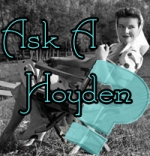
an on-set photo of Katharine Hepburn, with overlaid text reading "Ask A Hoyden?"auntie hoyden

Why, I enjoyed those posts (1, 2, 3) in which Lauredhel tried to answer search queries as questions too! So much so that I show up in this site’s logs looking for them. So today, I too become Auntie Hoyden.

Frankly, it appears to me that most people stop here on their way to I Can Haz Cheezburger (funny cat pictures, captioned cat pictures, supernatural macros funny, funny pics), but they also appear looking for soylent green simpsons, any medicine for truth speak and, in considerable numbers, anal sex diagram. (Which is a bit odd, Google finds plenty of considerably more helpful sites for me on that term.)

But let’s see what I can do for you all today, although my specialities are more in the computer line than the sexual health and breastfeeding line that is traditional for this.

pluralising names

Lauredhel observed in 2008 that there’s a construction in Australian English (among others) that allows you to use things like “the Marys of the world” to mean “people like one particular Mary” rather than necessary literally multiple people named Mary.

But if you’re simply interested in how to add a suffix to a proper noun in order to indicate multiple things with that name, here’s a style guide’s answer.

dog outline png

[Update 2019: freesvg.org or publicdomainvectors.org are currently more searchable than openclipart.org.]

I like openclipart.org for this sort of thing: it’s public domain clipart, take it, use it and modify it without credit. (Not that I don’t also love various Creative Commons licences that do require credit, but dropping that requirement makes using many pieces a lot easier. I’ve seen people who use CC images from Flickr need to put a credits roll at the end of slide presentations.)

Plus! openclipart.org provides SVG as well as PNG. SVG (Scalable Vector Graphics) is a free image format which allows pictures to be scaled up in size without loss of quality, as well as down in size. This is accomplished by describing an image in terms of lines or curves (hence, vectors) rather than in terms of individual coloured dots. It’s not very useful for photos, but it’s great for clipart (and fonts, which are generally described in vectors and thus can be scaled up).

openclipart.org has hundreds of drawings of dogs. I’m not sure if this person was looking for a silhouette of a dog, which I couldn’t find on a very brief look, or simply a line drawing of a dog, of which there are many. Here’s a cute one.

snuggle otter

Don’t. We love ’em but that doesn’t make them domesticated pets.

mother sprays milk

Does she ever. I breastfeed a ten month old baby. When he was little I had a supply suitable for twins, or perhaps sextuplets, and milk was everywhere. Then things balanced out and we had a nice interlude of not spraying. Then he got a bit more distractible, which resulted on the weekend in him getting a letdown, pulling off and slipping so that he headbutted me in the breast and milk shot out for the best part of a metre.

If anyone else wants to grace the Internet with a milk spray story, feel free.

australia’s prime minister 2010 smiling

On the 25th June 2010, one day after becoming leader of the government and being sworn in as Prime Minister, Julia Gillard smiled in the presence of the US ambassor to Australia, Jeff Bleich. This is important, because it was photographed by embassy staff, and as a work of the US Federal Government, it is thus in the public domain and you can get it from Wikimedia Commons.

anti filter

That’s us!

Can you help out with these?
squirrel give thanks
the worst shoe eveeeer
placenta accreta deathrate
crivens!