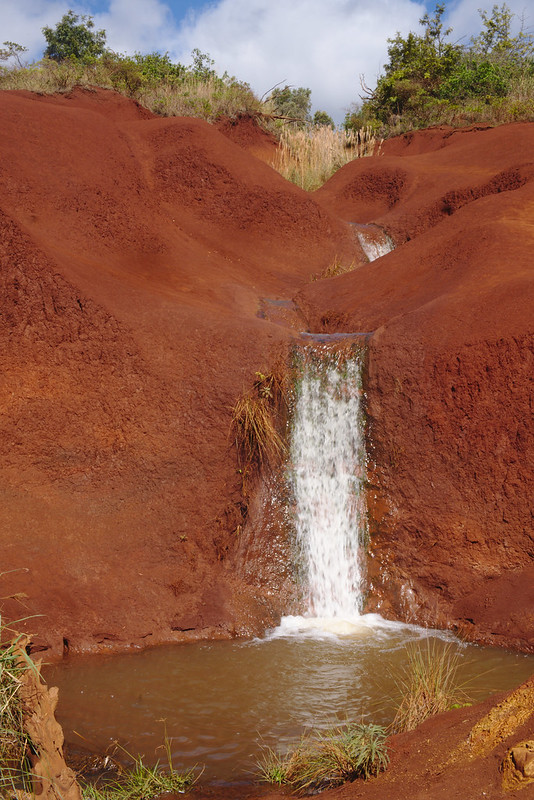
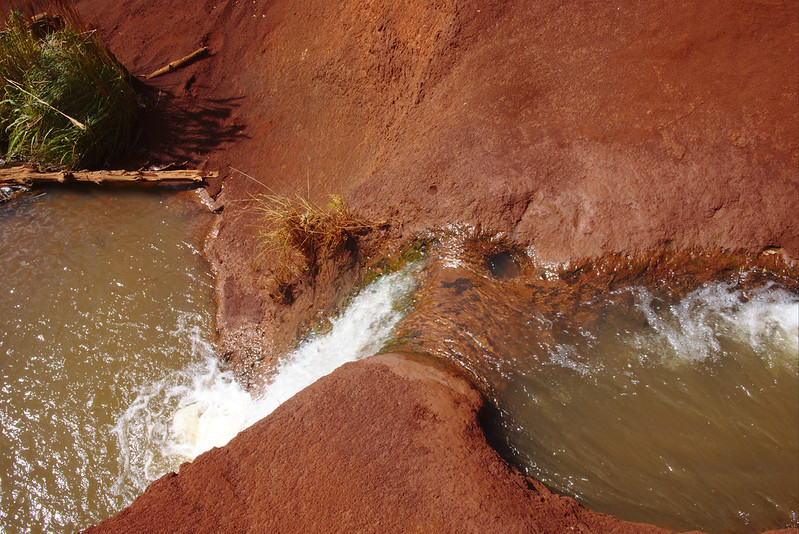
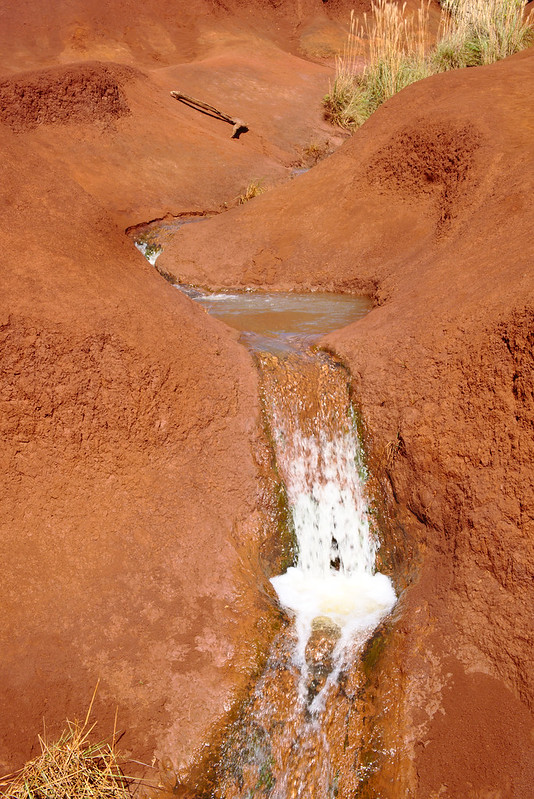
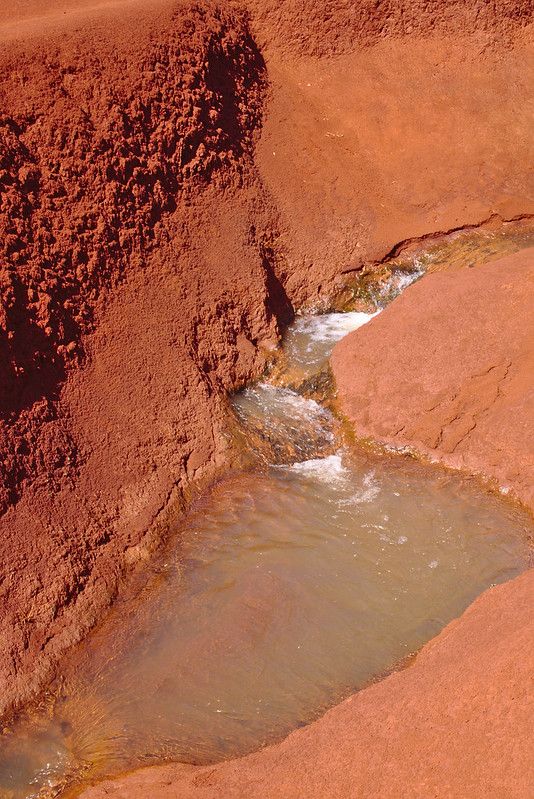
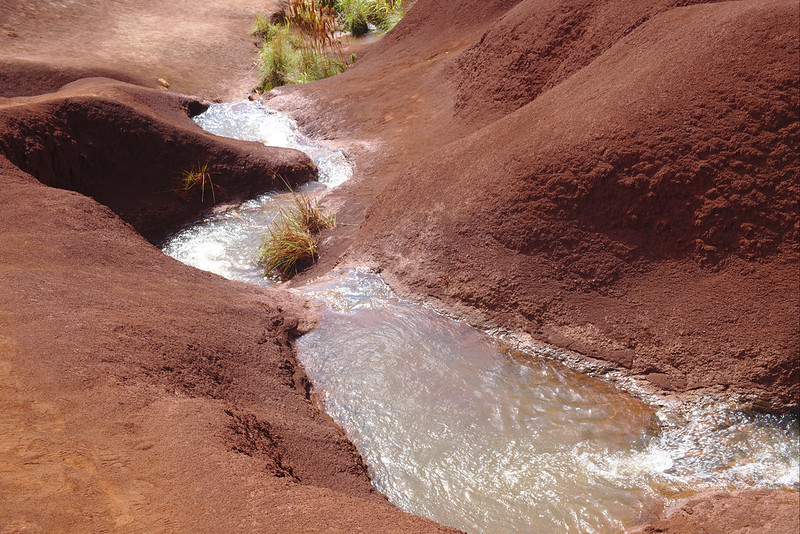
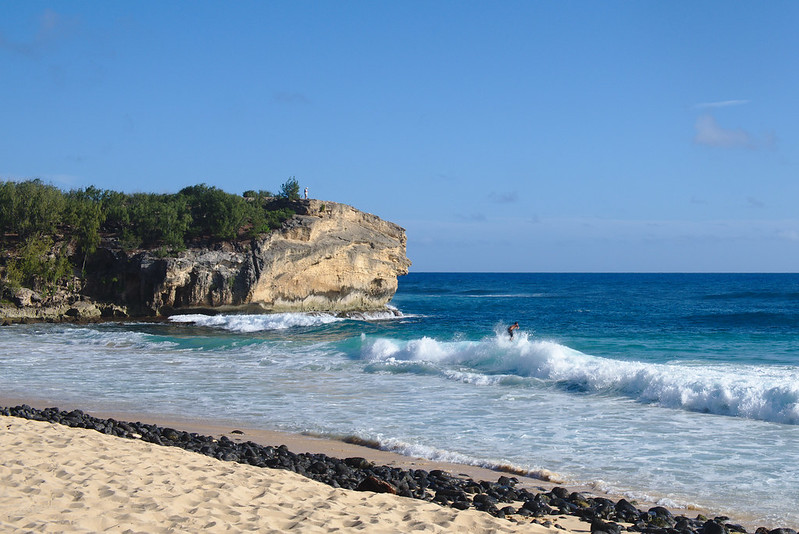
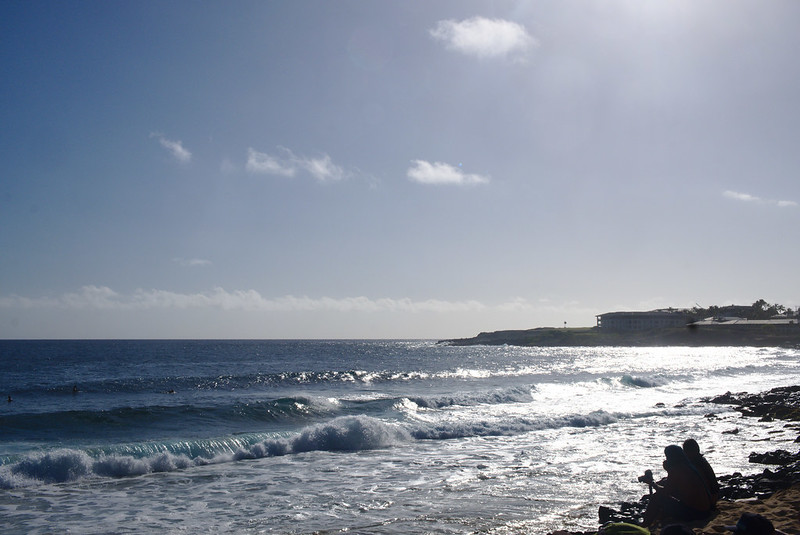
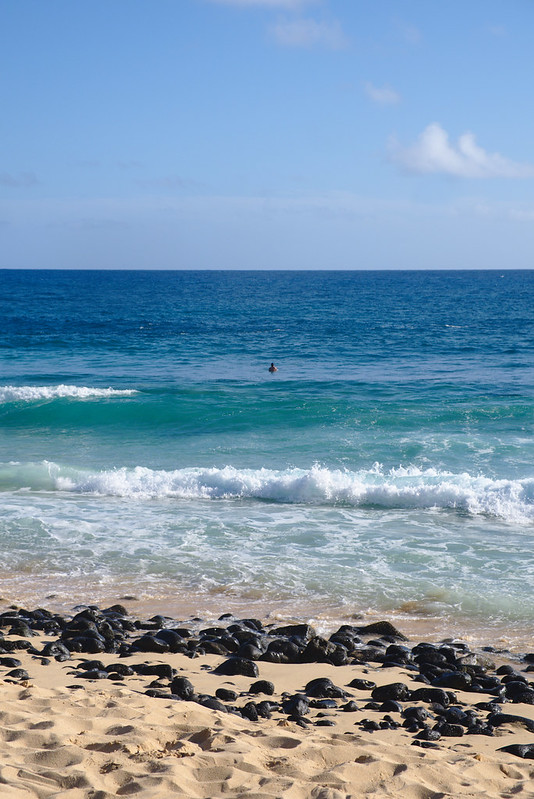
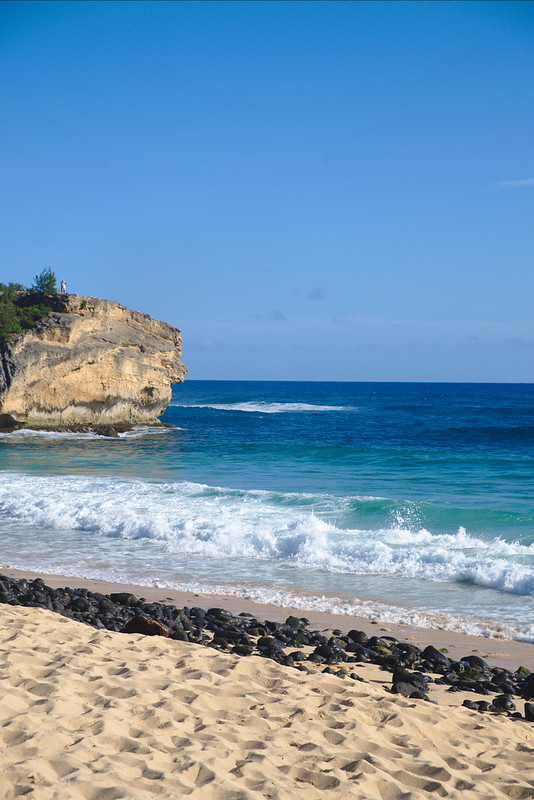
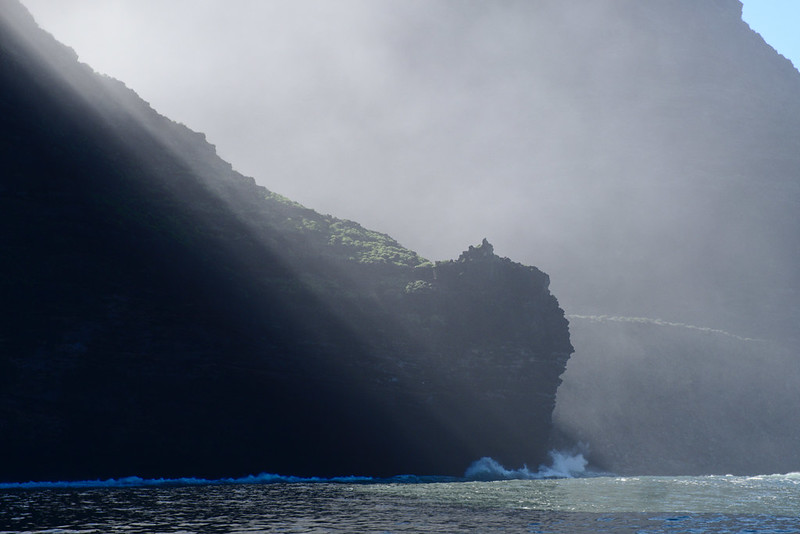
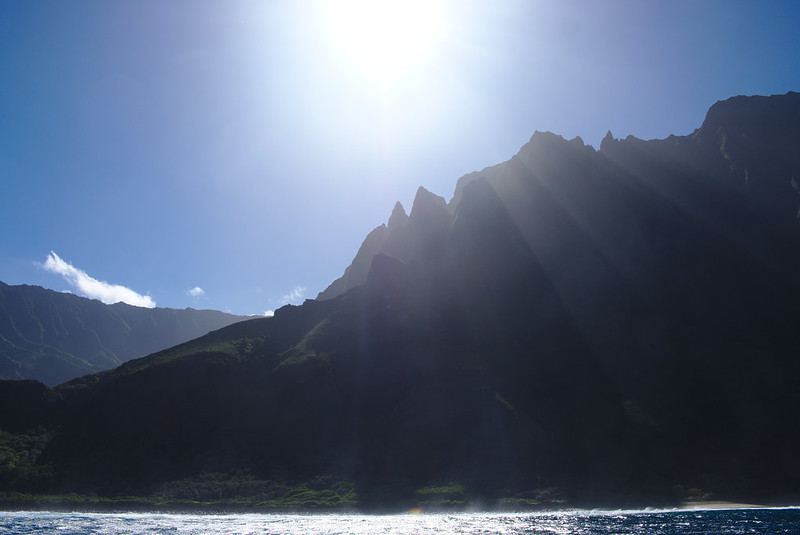
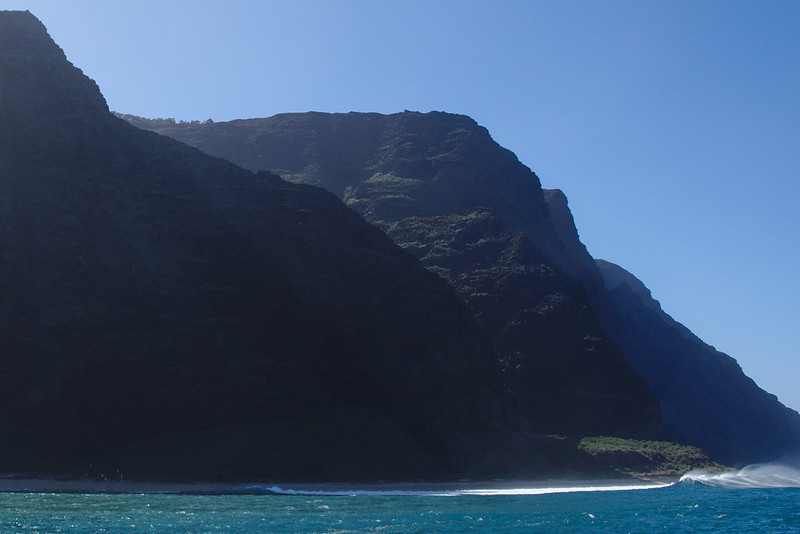
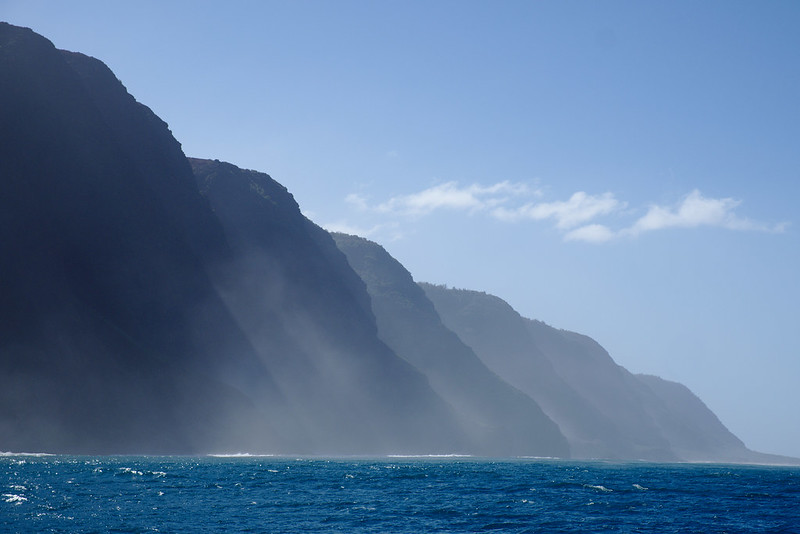
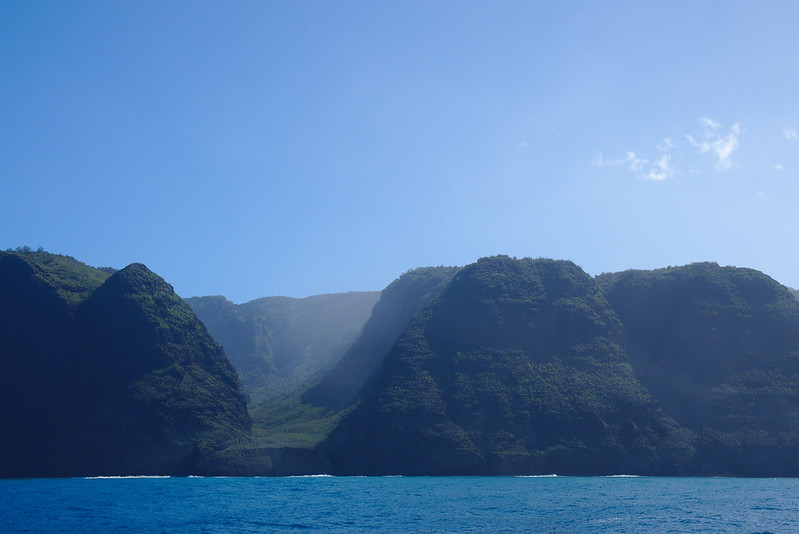
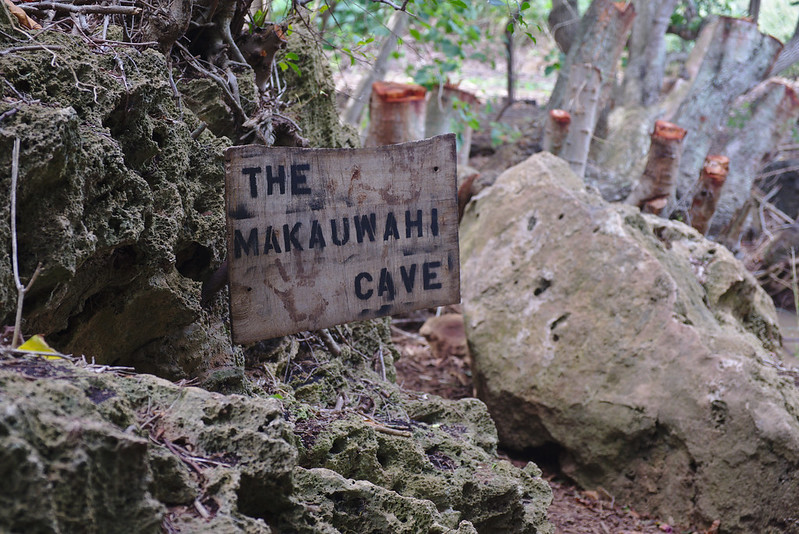
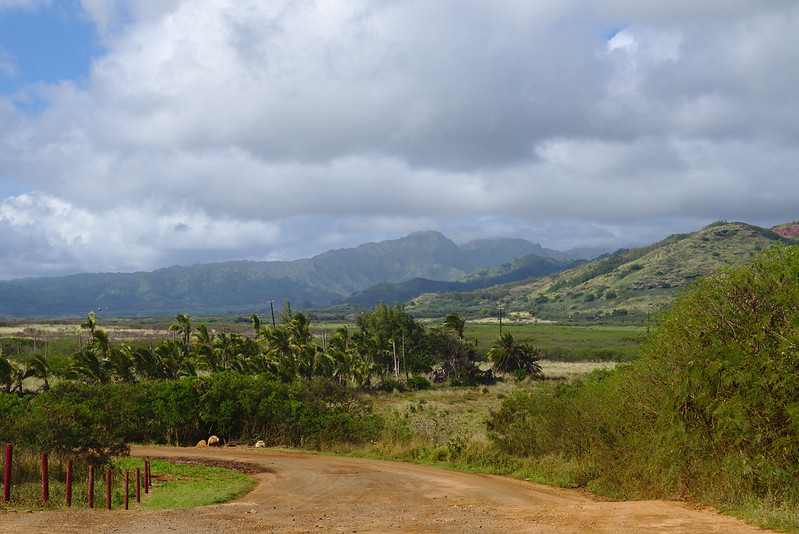
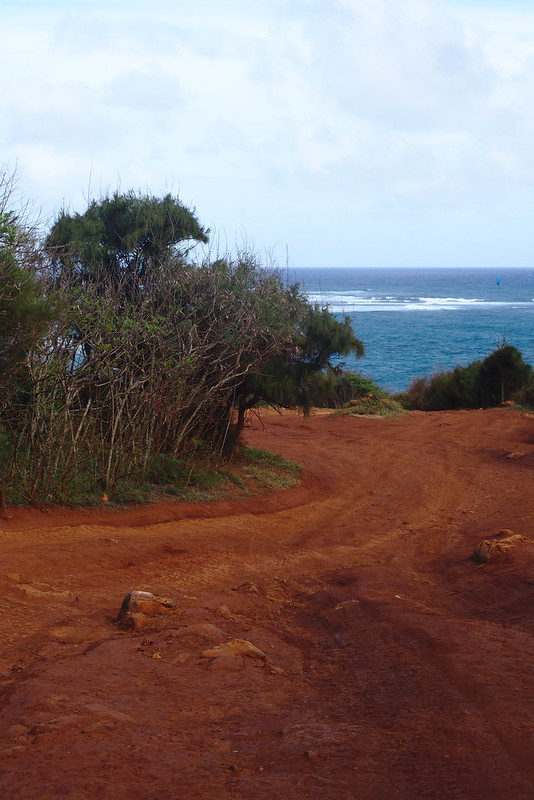
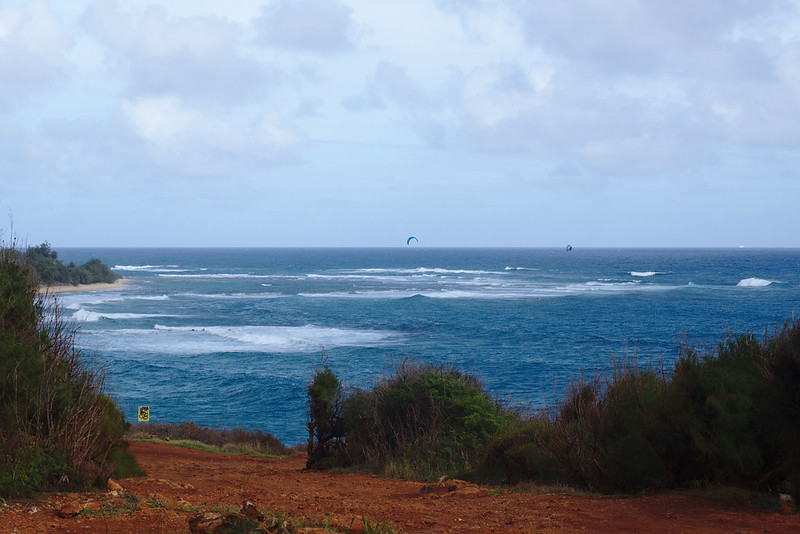
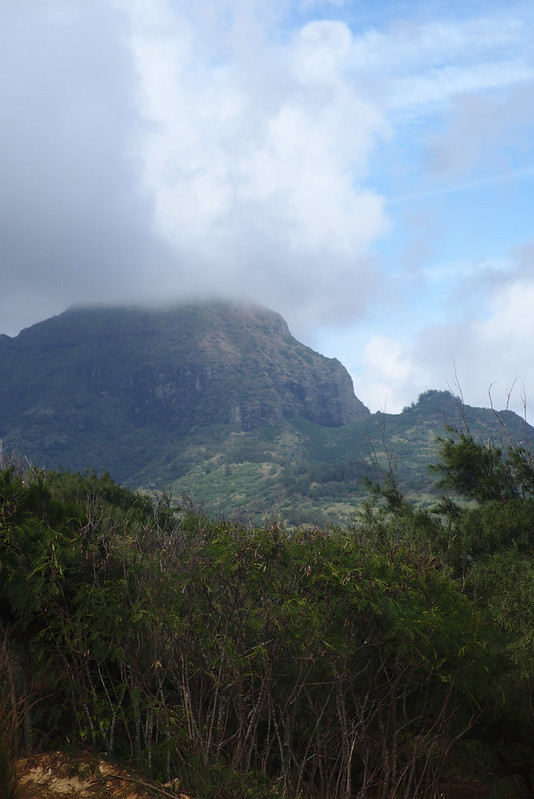
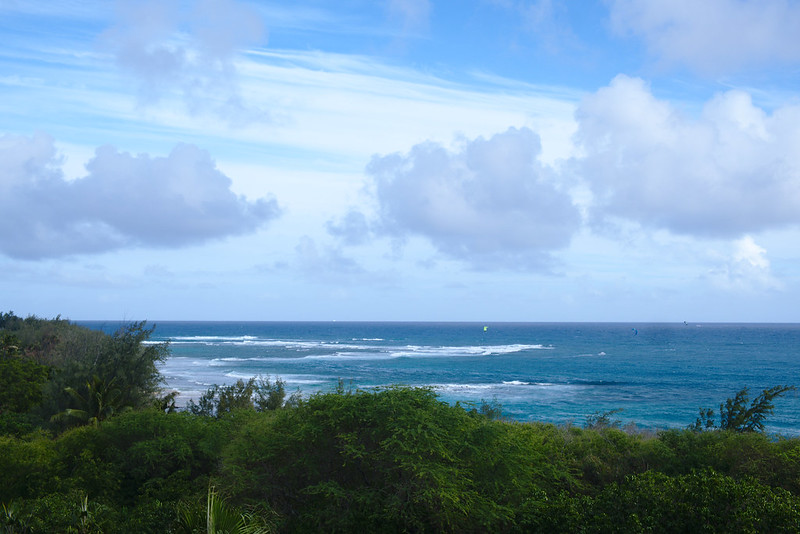
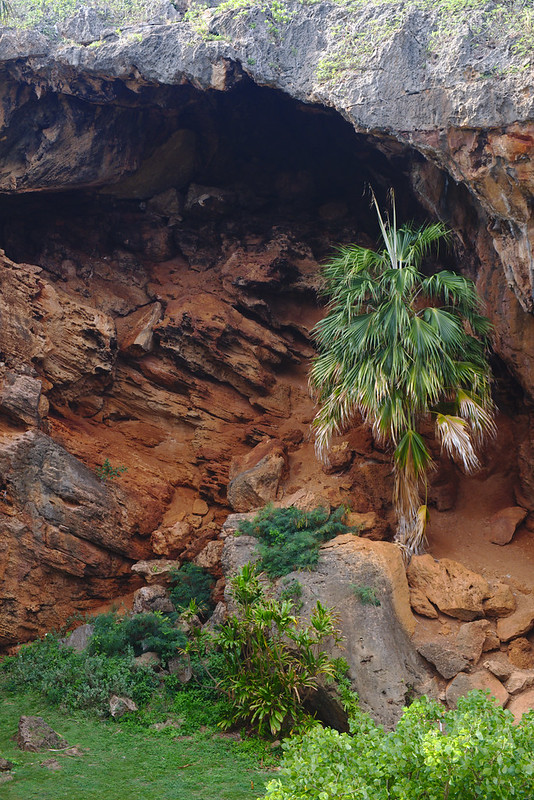
The January winter ocean was rough, the sun was behind the cliffs, and the air was full of sea spray. Breathtakingly difficult to photograph and develop, and yet…
Photos of Kauaʻi, January 2018 (in progress).

by Mary
The January winter ocean was rough, the sun was behind the cliffs, and the air was full of sea spray. Breathtakingly difficult to photograph and develop, and yet…
Photos of Kauaʻi, January 2018 (in progress).
It was slightly too hot for a comfortable walk, everyone was a little tired, the kids were grumpy. They wanted to go down to the beach, we didn’t want to slog back up the hill covered in red dust. And when we got down to the promised cave, it had shut for the day and we all had to turn tail and go home.
You’d think this would be difficult to forgive, but this made it possible:
Photos of Kauaʻi, January 2018 (in progress).
It was all over four years ago yesterday, and here’s what I remember fondly:
A week and a half of not testing, and just walking around being pretty sure that everything was changing.
Seeing a beating heart on the ultrasound during a threatened miscarriage, and walking home feeling so proud of the tiny little thing in there, beating its heart like that.
The first time I felt a baby move inside me; the sensation of rolling over and something rolling the other way, like a bolt had come loose inside me and fallen away.
Rubbing a baby spine through my belly.
Listening to the heartbeat storm up on the monitor as the baby prepared to kick at the sensors squeezing my belly.
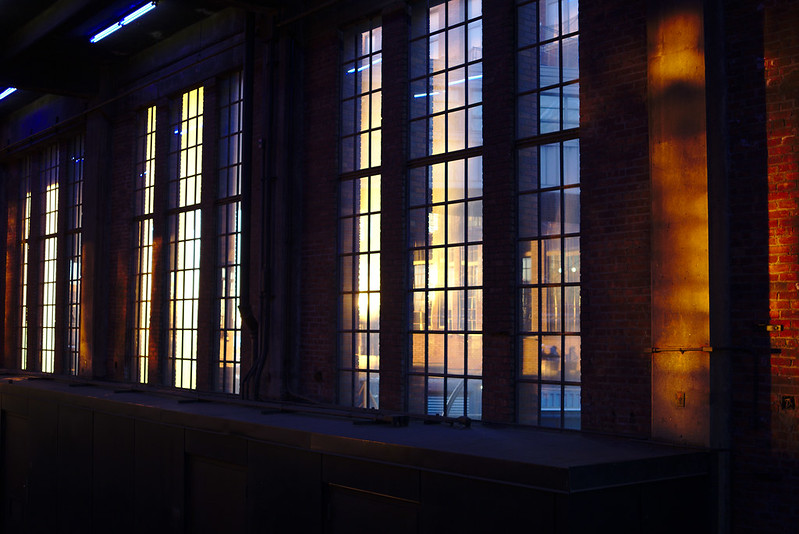
Labouring at home in the light of the many blue LEDs I didn’t realise we had until that night.
People politely waiting around a hospital room for contractions to pass every 3 minutes or so, so we could resume our conversation.
Reading over last year’s (very dark) reflections, I would say 2017 was not the year I feared. While it will take a few years yet to tell what 2017 really was to the world, for me, it was a quiet and quite inward looking year, after a very hard 2015 and 2016.
January: I was ill and taking regular naps at work; weirdly easy to go to sleep. Dark rooms, trip-hop through my headphones, and free associating.
May: New York City, so overwhelmed in a new job and so jetlagged that I worked a fifteen hour day and fell into bed for a brief sleep when I lost the ability to speak English.
November: Snorkelling in the Whitsundays, wishing again and always that I had scuba equipment, but happy and peaceful in the water.
May: our wedding anniversary meal, degustation at Restaurant Como. Especially the rose-and-raspberry Eton mess, adding a bunch of subtlety to something that’s usually more like a hammer for a sweet tooth.
May and November: sashimi at Asuka Sushi. In planning to visit New York a few times a year, I wanted to find a few rituals to get me through the visits. Sashimi seems like a good choice. Protein versus jetlag.
Throughout the second half of the year: the truffle oil dumpling at the Din Tai Fung outlets throughout Sydney. As with making an Eton mess subtle, this makes truffle just subtle enough. And there’s only ever one of them…
This represents being happy at work to me, although it’s also a million years ago in 2017-career-time. I was a newbie facing her first performance review, not the incoming manager of the team):
By the following cycle, I was doing performance reviews for other people.
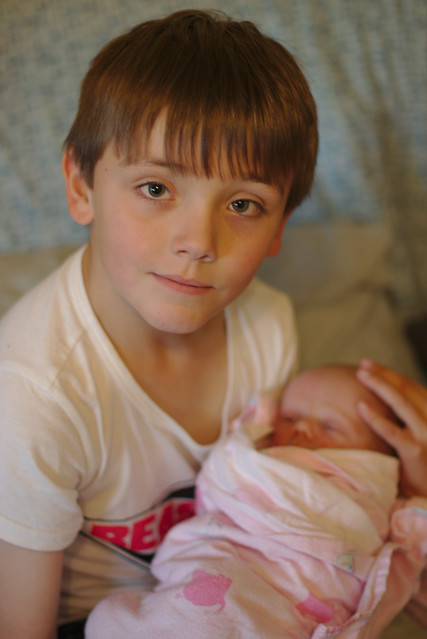
A sweet boy and his baby cousin:
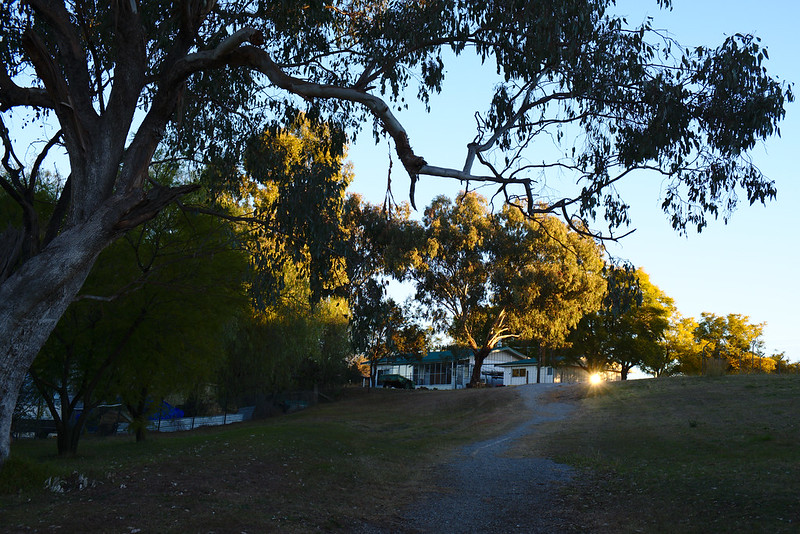
The sun setting over the exit from Monk Park in Tamworth, a walk I did many times as a child:
Throughout the year: bike rides to work after a fresh service and with full tyres, fast climbs for a change.
May: our wedding anniversary weekend away west of the mountains. Wood fire, hot tub, creek nearby, eucalyptus leaves glowing yellow-green when the sun shone through them.
August/September: the week when skiing finally clicked for me. Mid-week, I led Andrew down a narrow run that neither of us had seen before. With my daughter ill on the last day of our lift ticket, Andrew took care of her in the morning while I did my last ski runs; three each of the intermediate runs on Merritts Mountain. Two falls all week; one the now traditional collision with Andrew. Lots of fun.
January: the first of the Trump travel bans, the one that proposed to limit green card holder travel to the US. Protests at US airports, mobilisation inside my workplace. I ran a fundraiser for a few tens of thousands for refugee rights activism in Australia.
February onwards: Reflecting on one very, very strange year at Uber and the ongoing work of The Silence Breakers, whether named in Time or not. Australia’s version, I think, is just firing up.
December: the passing of Marriage Amendment (Definition and Religious Freedoms) Act 2017 on the 7th. I wasn’t in the country when the postal vote results came out and it became clear that fears that the ‘Yes’ vote would be complacent about turning out were unfounded. And I wasn’t following the parliamentary progress either, so I had to catch up that evening. I got a rather mystified Vincent to watch it carefully.
Throughout the year: hypnagogic hallucinations, almost every night. I’ve occasionally had them before but not nearly so constantly. They’re more like dreams than like free associating for me; they have images and plots. They’re mostly harmless; they’re only somewhat annoying in that I usually wake up from them a few times before going all the way to sleep.
November: New York, around −5°C and windy. Despite my (excellent) new winter coat that I bought for that trip, the cold surrounded my legs in their thin trousers and got up into my core that way. I run very hot, thyroid or no, so getting truly cold on a short walk is very memorable.
November again: sleeping under the stars on a boat in Queensland. I was committed to the outdoor plan as soon as I heard that the cabins often get above 30°C at night. The first night I was short a blanket but really tired, so I woke to squint at the stars over and over before sleepiness won over chill. On the third night, it rained just enough to wake me gently, and not enough to drive me inside.
May: my uncle Rob died of a brain tumour aged 57, just shy of nine months after he was diagnosed (alluded to in last year’s version of this). I wasn’t in the country for his funeral; I flew up to Tamworth the day before I left and drove my teenage cousin around to shop for soft drinks to be served at his wake.
Later in the year: another friend was diagnosed with cancer.
I’ve thought more about Nóirín again this year. It was the year of the silence breakers after all, and of course the Ninth Circuit ruling. Nóirín was one of many silence breakers who paved the way.
We’re heading to Kauaʻi in January with some of my friends, the first time we’ve travelled overseas with both children and both adults. I’m a bit wary of what it will be like, with Vincent the child who is only alive around other children.
I’m going to do an introduction to sailing course early in the year, and if it works out, train through to day skipper so that we can charter sailboats for weekends away. Like camping, only with more water, wind, and creature comforts. That’s the theory.
New York is my main work travel destination, so I’ll be there again at least once. My parents are hoping to join me for one trip. I’d like to spend time in Brooklyn while I’m there.
Some good news about climate change, whether statistics or serious political will.
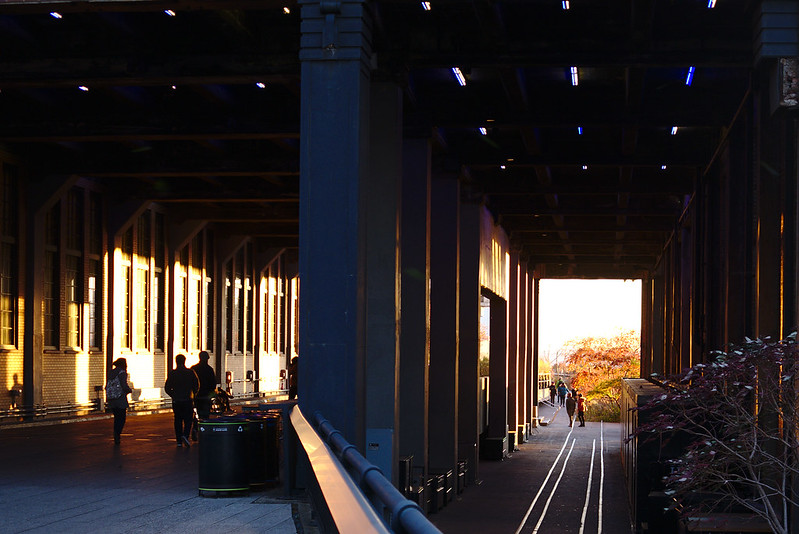
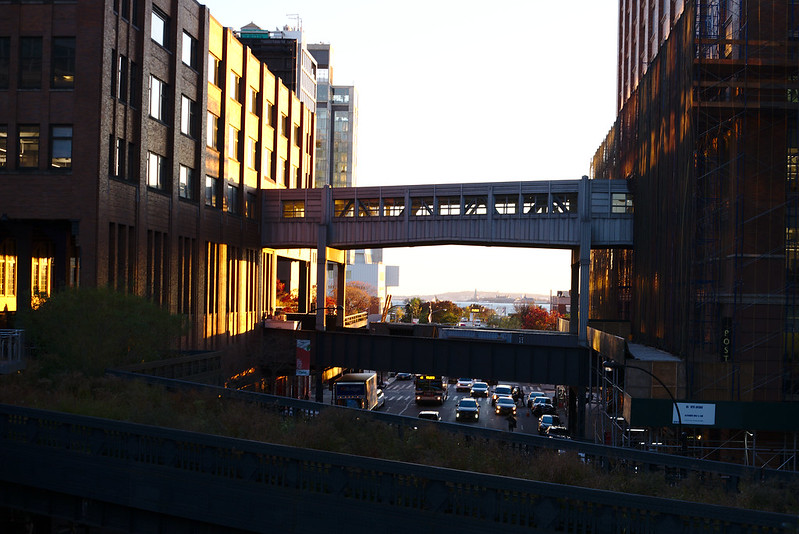
Travelling to North America with my family. This is somewhere between a hope and a plan; I’ve barely begun putting it together. But it is increasingly strange and sad having two lives, one as a single career woman in North America and the other as a married mother of two in Sydney. Andrew and I have both walked the High Line in New York, but never together, both explored Lands End in San Francisco, but never together.
An easy one: I hope it rains all day at some point. It’s been a dry year; I really miss a good rainy day.
I came up with my end of year prompts in 2014, feel free to use them yourself.
We’ve had a snow holiday in Thredbo four years in a row, and are talking about a change. But saying goodbye to the hour of road near it will be hard:
End of year reflections: 2016, at its low points, has been the worst year of my life, and many people including me fear that it is the year that marks the beginning or escalation or point of no return for a time of increased oppression, war, and death.
This is thus hard to write, but 2016 was also a year in my life, such as it is, and remembering is part of living as best I can, so here we are.
There are several pieces of writing that have been important to how I feel about the world right now, here’s one:
I wrote a poem in response to a question I’ve been asked often this week. Take care, everyone. pic.twitter.com/hozzcE7mg7
— Saladin Ahmed (@saladinahmed) November 13, 2016
(Transcript of poem at the bottom of the entry. If this poem speaks to you as it did to me, consider tipping its author.)
May: Another visit to Dolores Park, a place in San Francisco that’s been important to me in 2016. I was restless and in a bad mood so I walked up and down the hill, around and around the park, and then up to Market Street as the sun set and along and eventually caught BART back after dark had fallen and I’d walked several kilometres.
September: A family member who is ill and was visiting for medical treatment came to lunch at my house with other members of my family. My daughter A, who was 2¾, had taken a long long time to come out of her shell with strangers, and was only just starting to agree to interact with them at all. But she ended up playing with water guns with the teenagers, aiming water at our window where adults were protecting themselves, while dancing and cackling.
November: I found out Donald Trump was likely to win the US Presidential election on my final day of isolation due to radioactive iodone treatment for thyroid cancer. I was out of strict isolation in hospital but still not allowed to be physically close to anyone, particularly my children, so I was driving a carshare car by myself to visit my parents. It was a rainy drive, I stopped in the light mist at Sutton Park to go to toilets there — it’s a lovely park and rest area largely used as a chance for a loo break — and looked at the news on my phone and then drove down into the bright sunshine and ludicrous green on the other side of the mountains and started thinking through the implications.
All in the US, where I spent six weeks this year.
1. May, Zuni Café, San Francisco: the second time a friend and I have eaten there, this time upstairs with a reservation rather than squeezed in near the kitchen, both times with the fried chicken. I have never gone anywhere for the fried chicken. I have never imagined I would. All the better.
2. September, SHED Cafe, Healdsburg: a lemon pancake which was in fact a lemon pudding. Not even in disguise, it came in its own ceramic dish it had been cooked in. It wasn’t self-saucing or it would have been lemon delicious pudding in disguise. It was left off the order originally, I got two kaffir lime waters in apology. Unnecessary.
3. October, Andrew’s Cheese Shop, Santa Monica: a work dinner, comprised of gourmet grilled cheeses with matched beers. Again, I would never ever think to do something like this for myself.
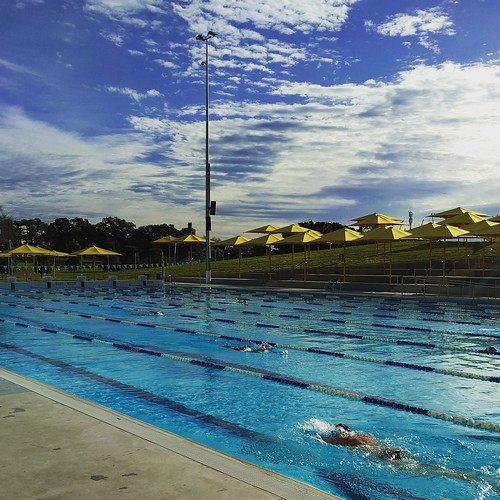
The first day of a silly between-jobs project of exploring the City of Sydney swimming pools:
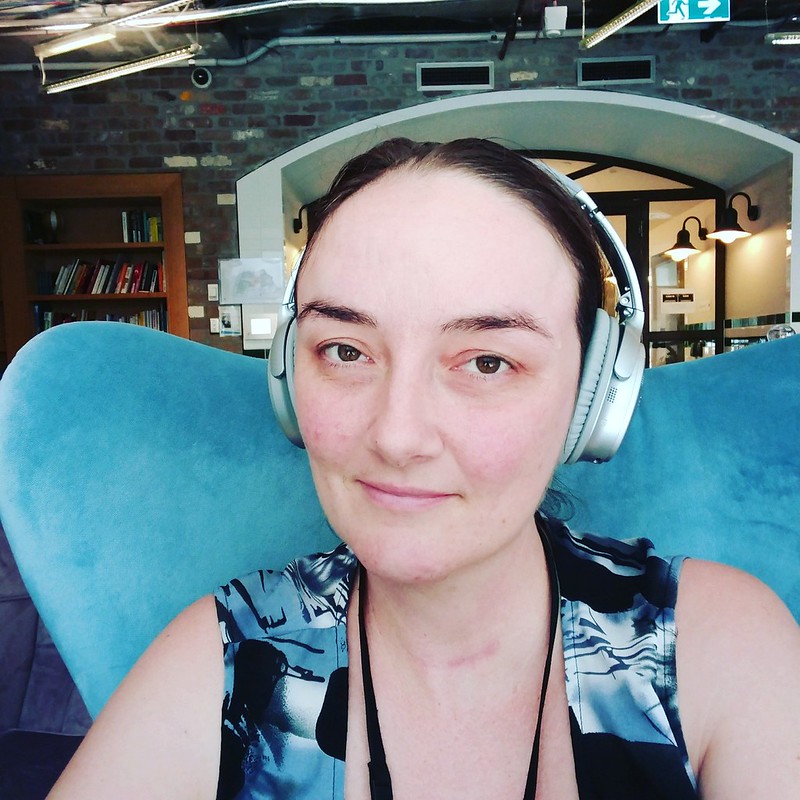
A selfie I’m pretty happy with:
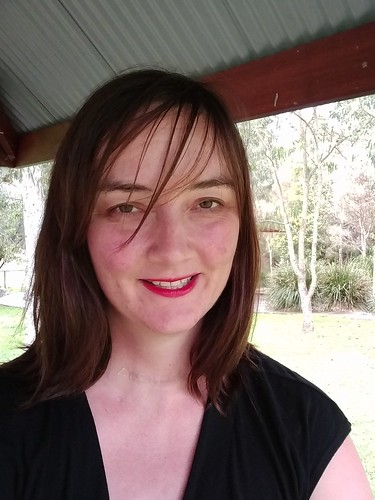
I was still taping the thyroidectomy scar at the time; it’s more purple than it looks there.
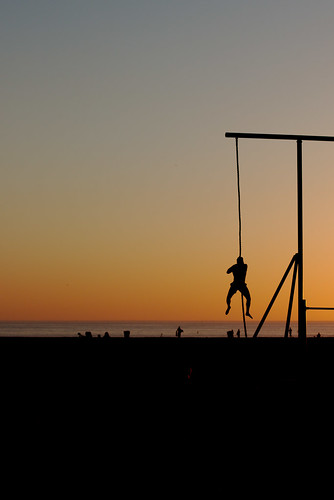
Someone climbs a rope, hands-only, as the sun sets over Santa Monica beach:
1. I did do the intermediate run on skis I wanted. The very first one was the result of a misunderstanding; my skiing buddy thought I’d done intermediate runs in Australia and therefore after warming up could do one at Heavenly. Instead it was a first. The day went downhill (ha) after part of the resort was shut due to wind, and we missed lunch, but the cold grey morning was lovely.
2. Being taken to the ward after my thyroidectomy and having Andrew smile at me and squeeze my hand during the brief moments I was able to be awake for that afternoon.
3. The feeling of my hair swishing on my neck now that it has grown long enough.
Putin, I think? I’ve talked enough about the US. So: Putin, Aleppo, Brexit.
You have to be a better and stronger person than I am to find something else to say.
1. “Koala” snuggles with my daughter, who is not as demonstrative as her older brother, except when she curls firmly into me to avoid anything or anyone she doesn’t like. Or when she’s ready for bed. Fierce sleepy marsupials are about right.
2. The taste of Haigh’s chocolates on several occasions: I bought them for myself for both cancer treatments, and when I left my job mid-year (between treatments). I remember the sweetness of the cremes, so sweet it hurts, but what I recommend is the truffles.
3. The taste of lemon sherbet boiled sweets. I went through a bag of them on medical advice during the radioactive iodine treatment; the I131 also gathers in the salivary glands and gives them mild radiation burns. Getting it excreted is the main fix, hence sour things.
1. A number of serious illnesses that aren’t mine, so aren’t mine to talk about.
2. Speaking of illnesses, but that are, or were, mine, the morning before a surgery is always a terrible time for me.
3. I actively chose to switch jobs again this year, but it was really hard and sad.
1. I’ve started cycling in the last few months of this year. It’s a nice ride just shy of 4km with enough hills to get some exercise and a long bridge ride. In 2017 our ongoing ridiculous childcare situation will be improved, and I’m hoping riding three or four days a week will be my normal thing.
2. A peaceful week-long holiday with Andrew and the kids at Lake Macquarie. I find skiing hard work, so this will be only the second relaxing holiday we’ve all had together in the three years since my daughter was born.
3. As little travel as I can get away with. I’d love to clock up six months without a boarding pass.
This year, a very close cousin of “three fears”.
1. I hope my strong and wise friends are here and fighting and see something good growing from their hard work and their fear.
2. I hope it’s still possible to work for US headquartered employers in my industry without rapidly worsening complicity in human rights abuses.
3. I hope for at least one night out together with my husband that isn’t “last night before I go away for work” or “last night before I’m admitted to hospital again”.
Transcript of the poem by Saladin Ahmed:
How do you talk to your kids?
Spit out the scorpions
Spit out the cyanide
Fill your mouth with thorny
flowersSit and hold their hands
Sit staring at their
superhero posters
Explain that villains win
sometimesTell them no one can tear
apart their familyEven if it’s a lie
Tell them that no one can take
away their homeEven if it’s a lie
Tell them you will keep them
safe
Even if you can’tTeach your daughter to throw
a punch if she has to
Teach your son to cry if he
has toGive them knives
Give them the sturdiest wax
you can findTeach them to make candles
—Saladin Ahmed, buzzfeednews/reader
I came up with my end of year prompts in 2014, feel free to use them yourself.
I’m in the process of wrapping up a long period of working remotely at least part-time from home, beginning in 2006 when I enrolled in a PhD program and continuing through my time at the Ada Initiative and at Stripe to this year.
My take on working remotely in future is really “it depends on the details” (and likely different details for different organizations). To that end, I contributed some suggested questions you could ask to Hypothesis’s Working remotely guide, which they’ve incorporated in a slightly edited form. Here’s my original questions; I’ve also added a few more at my end after some feedback from Andrew (himself a veteran of around seven years of remote work).
Before you start working remotely at a new organization, you should explore how they structure remote working and if there are any expectations mismatches between you and the organization. A particular remote job may or may not be a match for a particular remote worker.
Important: I don’t think there is any one right answer to any of these questions. It’s a question of fit between your working style, the position itself, and the relationship of the position to the rest of the organization. But the answers are worth knowing so that you can evaluate your fit and make plans for effective remote working.
This entry has a lot of questions, too many for a “do you have any questions?” section of an interview. But you can use other sources of information to get most answers, especially about organization-wide questions:
Some questions you also may only need to ask if you hear of concrete plans to make a change to the organization (eg, you learn that a new office is about to open near you).
How are you remote and who are you remote from? This post is using ‘remote’ to mean something like “most days, you are not in face to face contact with any colleagues.” But you should be aware of the details: will you be working without in person contact with teammates or with the wider organization almost all of the time? Do you have any colleagues in your team or your wider organization in your city or region, or who regularly visit? Will you work on any joint projects with them? Will you be able or be expected to sometimes work with them in person even if there’s not a permanent office space?
Separately, is in-person contact with vendors or customers part of the job?
Is your immediate team remote? Is your manager remote? Being a remote member of a team that is all working remotely from each other is different from a team which is mostly located in an office with each other. Likewise, being managed by someone who is in an office has some potential advantages (for example, access to information circulating through verbal grapevines, being able to access answers from colleagues for you quickly), as does being managed by someone who is themselves remote (a direct appreciation for experiences specific to remote workers, a personal interest in advocating for them).
How many remote workers are there at the rest of the organization? What percentage of teams you will work closely with are working remotely, and what percentage of employees overall are working remotely? Working as one of very few remote workers for an organization where most employees are in an office together is different from a mostly or entirely remote-working organization.
What’s the future of remote work at the organization? If the organization is mostly or entirely remote, are there any plans to change that? If the organization is mostly office-based, are there any plans to change that? If an office is likely to be founded in your city or region soon, will you be able or be expected to work from it?
You may be considering a job on the understanding that the remote work will be of very short duration (eg, an office is opening in your city in two months time). Is there any chance the time will be longer, and are you OK with that?
What is your manager’s approach to remote workers? How frequently will they speak with you and through what media? Will they expect you to travel to them? Will they sometimes travel to you? Have they managed remote workers before?
How long have there been remote workers for? Is the organization new to having remote workers or has it had remote workers for a long time and bedded down a remote working style?
What is the remote working culture like? Is most collaboration over email, text chat, phone, video conf, or some other means? Are there watercooler-equivalents like social IRC channels or video chats? How active are they? Are remote workers mainly working from home or from co-working spaces? Are there occasional team gatherings for remote workers to meet colleagues in person and are they optional or compulsory?
How flexible are the hours? Not all remote work has flexible hours; you may have mandated work hours, or core hours, or shifts, as in any other role.
Are the remote workers spread across multiple timezones? If so, are your team and closest collagues in your timezone or another one? Are you expected to adapt your working hours to overlap better with your colleagues? How are meetings and other commitments scheduled across timezones? Do they rotate through timezones or are they always held in a certain timezone? Are you ever expected to attend meetings well outside your working hours, and if so, how often is this expected and do your colleagues in other timezones face the same expectations?
What are the benefits for remote workers? Will the organization reimburse any of your remote working expenses, such as membership of a co-working space, home office furniture, or your home Internet connection costs? If you’re working in a different country from most of your colleagues, will you get equivalent benefits to your colleagues (eg, health insurance coverage)?
What are the travel expectations for remote workers? Are you expected to travel to headquarters or other offices or customers, and if so, how often and for how long? What are the travel policies and allowances for remote workers? How do these travel expectations compare to those of non-remote colleagues?
Sometimes you will be remote from an organization with an office or even headquarters in the same city as you. Will you be able or expected to visit the office? How often? Will there be resources for you (eg, hot desks, meal provisioning)?
What are the career progression possibilities for remote workers? As a remote worker in a partly non-remote organization, could you move into more senior positions over time, such as team leader, middle manager, or executive? Could you move into other teams in the organization, and if so, which ones? Are there some roles that are closed to remote workers? Match these answers to your own career goals.
What’s the training process like? Must you or can you spend a period of time in an office or visiting a colleague for training? Must you or can you do your training remotely using documentation, videos and similar? Will a trainer or colleague have some time assigned to remotely train you?
Is there support for first-time remote workers? If you haven’t worked remotely before, will the organization support you in learning how to work remotely, and if so, how?
A very partial list of resources, focussing on individual remote workers and their experiences and strategies:

Learning more about a remote working position by Mary Gardiner is licensed under a Creative Commons Attribution-ShareAlike 4.0 International License.
Leigh advises if you tell a story three times, blog it. My version is “if you give advice three times…” I tend to assume that Sydney advice is fairly easy to find for visitors, but sometimes it’s better from someone you know! I’ve given advice to three separate first-time travellers to Sydney in two months, and am accordingly freeing it for you, my reading audience.

I’ve lived in Sydney for 17 years this year, my entire adult life. My Sydney biases: I like walking and exploring ourdoors. I like things that can be done during the day and ideally that you can take children to. I like dining out including fine dining. I’ve spent the vast bulk of my time in Sydney living without a car and tend to recommend things accessible via public transport.
There are some things I can’t help you with: I’ve never spent much time in pubs and clubs and in any case I’ve had children for more than six years so my already limited partying knowledge is pretty well atrophied now. I’m also not a serious outdoor sports person: I know you can kayak and ocean swim in Sydney but I can’t tell you where or how better than the Internet can.
Unless you have some reason to stay in some particular part of Sydney, stay near Circular Quay or Wynyard train stations for access to the most public transport. If you’re visiting almost entirely for the beaches, stay in Bondi or Manly.
Walk from Circular Quay past (or into) the Opera House and through the Botanical Gardens. The Opera House has performances in many genres if opera isn’t your thing.
Catch the ferry from Circular Quay to Manly. The ferry trip alone is worth it; it is one of the longer ones and you will see much of the eastern harbour. Manly is a beach suburb; you can swim at a harbour or ocean or sheltered ocean beach, do the Manly to Fairlight penguin walk or go to the aquarium.
Catch the ferry from Circular Quay to Cockatoo Island. Cockatoo Island used to be a island-sized shipyard and is now an island-sized museum of ex-shipyarding. You can ramble through giant sheds and along catwalks and so on. There’s on-island camping and glamping, the only harbour island that allows overnight stays. If an island picnic is more your thing, there are also private ferries from Circular Quay to Shark Island, which is more like a large park.

Visit the Maritime Museum at Darling Harbour. Their permanent exhibits include decommissioned naval vessels and a submarine. Have a look at the current exhibits at the Powerhouse Museum for science and technology possibilities.
Head to the beach. As above, Manly is a good choice, and in the eastern suburbs Bondi is famous and has fairly good transport. It’s also a starting point for the beautiful Bondi to Bronte coastal walk. Coogee is the beach with perhaps the next best transport options. Clovelly is a long inlet and thus very calm. Most beaches, including Bondi, Coogee, and Manly have an ocean bath – a pool filled with seawater – if you’re not up for swimming in the ocean.

The art gallery I like best is the Museum of Contemporary Art right at Circular Quay. The huge mural at the entrance is re-commissioned and painted over once a year or so, so look at the current one whenever you go. The cafe at the top has an excellent view.
I’m not done with ferries yet, you can also catch Circular Quay ferries to Luna Park, a harbourside amusement park, and to Taronga Zoo, Sydney’s best known zoo. The Gunner’s Barracks in the vicinity of the zoo is a great ramble but harder to reach from the south side of the harbour.

Great walks include the Bondi to Bronte walk mentioned above, the Glebe foreshore walk and the Harbour Bridge to Manly walk (or the Spit Bridge to Manly half depending on your walking distance and available time).
The water park Wet n Wild may be more of an acquired taste, but I keep wanting to take visitors there. You don’t need to be an especially strong swimmer but a love of rollercoasters might help.
Seasonal things to look out for include the yearly Sydney Festival and Vivid festivals in summer and winter respectively. Vivid includes large light installations around the harbour and other parts of the city. There’s Sculpture By the Sea exhibits on the Bondi to Bronte walk in spring. The film festival is in June and the comedy festival in April and May.

Fine dining is often in flux, check recent restaurant reviews. The Boathouse at Glebe is the closest to a regular we have; it specialises in seafood. Cafe Sydney is my preferred place with a view.
For cafes and gastro pub-style eating, head to Surry Hills; bills is the best known cafe. Haymarket is the centre of Chinese food, and the other side of George Street has some great Thai places including Chat Thai.
If despite my protestations of ignorance someone insisted I choose the bar, for visitors I’d go with the Opera Bar on the lower level of the approach to the Opera House, or try out Blu Bar at the top of the Shangri-La if everyone was willing to primp for it. If your motivation is cocktails alone, the Different Drummer in Glebe is good.
The Blue Mountains to the west are reachable as a day trip on public transport; head to Katoomba and to the Echo Point lookout.
Jervis Bay to the south is a good weekend away; you’ll likely want to drive. If you want to do some kayaking without having to deal with the boat traffic in Sydney Harbour this and several other places on the coast are good alternatives.
Sydney by Nigel Howe.
Cockatoo Island, Sydney by Chris Marchant, cropped and colour adjusted by Mary Gardiner.
Coogee beach, Sydney pool by Tim Gillin, rotated, cropped and colour adjusted by Mary Gardiner.
Luna Park Sydney by Simon Clancy, cropped and colour adjusted by Mary Gardiner.
Vivid Sydney 2014 by MD111, rotated cropped and colour adjusted by Mary Gardiner, availabe as Creative Commons Attribution-Sharealike. The Museum of Contemporary Art light show in 2014 was inspired by artist Jess Johnson, but artist unknown and copyright presumably all rights reserved.