
Your first fundraiser: your early donors

This entry is part 5 of 9 in the series Your first fundraiser

In 2011, I co-founded the Ada Initiative, a charitable organisation promoting and supporting women in open technology and culture. Between 2011 and 2014, we ran five fundraising drives, four successfully. This article is part of a series sharing what I learned in the hope that new women in technology groups and other activist groups can skip to advanced level fundraising much sooner and spend the least time and the most joy on fundraising that they possibly can.

Pre-drive pledges

In my article on how much to ask for I wrote:

To estimate your donors’ ability to give, it’s time to start asking people for money. Specifically, you need to figure out who is very likely to donate, and begin asking them to pledge to donating once your campaign kicks off. The pledge total will comprise a reasonable fraction of your donation total, somewhere between 10 and 25%. Once you have your pledges in, multiply the total by four. Is that enough to do what you need? No? Then you’re at serious risk of not reaching your goal, and you need to either bring your goal down, or figure out who else to ask for pledges.

Specifically, you’re going to send core supporters and likely large donors a message like this:

Dear [Name],

[1–2 sentences: Express excitement about your organisation and its progress.] [1 sentence: Explain your organisations’s need for money.]

To help us get [organisation] off to a great start, we’re going to be doing a fundraising drive, aiming to raise at least enough for [12 months of salaries? 6 months of rental? 6 months of rental costs? 5 memberships for folks who can’t afford one? 10 scholarships?] and get new people involved at the same time.

We need your help! Can you pledge to giving [$X] during our upcoming fundraising drive during [month]? Having your support, especially in the campaign’s early days, could make a big difference in the success of the campaign.

Thank you!
[Name]

Key things in this message: it’s short, concrete, and asks for a specific amount towards the goal. Each person sending these will want to write a version in their own voice, possibly also tailored to the recipient.

Who to ask, and will they hate me?

This bit is scary, because it is the first time you are putting your name and your relationships to the service of your fundraising. But this doesn’t require cold-calling or asking people who you know will be annoyed you asked.

Here’s who you’re looking to ask: people who already have expressed excitement about and commitment to your mission, people who are interested in you personally and want to see you succeed, people who can afford donations. This isn’t the time to harass a broke friend who is sceptical about your cause into donating. There’s never a time to harass that friend! It’s also not ethical to ask people who you have other financial power over, eg your dependants and your employees (including the organisation’s own employees). Ask people who can say no to you.

Instead, here’s some people you should consider:

  • yourselves, your board, your other volunteers
  • your members and attendees
  • people in your circles who have expressed enthusiasm about your organisation or mission
  • people in your circles who are supportive of you personally, and want to see you succeed

In later fundraising drives, this set of people will also include some of your previous donors, specifically the ones who gave large amounts, the ones who wrote in asking how they could please help further, and the ones who have since become volunteers.

One thing you may find reassuring: angry replies to requests are exceptionally rare, and in fact so is a polite “no”. There are plenty of people who won’t agree to pledge, and the way you’ll know this is their silence; they simply won’t reply to the request.

Estimating pledge amounts

Since you are asking money from committed and interested people, ask for an amount that is meaningful to them, and that represents a commitment when they reflect on it. Once you’ve run other fundraising drives it would be usually be one of the higher suggested amounts on your donation page, which in turn are suggested because some reasonable proportion of donors have proved to be willing to give that amount.

For a first fundraising drive, you and your board and core volunteers can consider your own donation histories. What amounts do you give to organisations you are particularly interested in and want to see succeed? You can also, as always, avoid originality, and survey the donation webpages of similar organisations and those with similar donor profiles (eg, donors are retirees, donors are wealthy professionals, donors are anticapitalists…) and look at their suggested donation amounts. You’ve probably made it onto a few organisation’s mailout lists, how much do they try and solicit from you as a year-end gift? These amounts are around about the right size.

It’s quite common for people to ask if they can pledge a smaller amount than you asked for. Of course you should agree to this.

Other things to ask for

If any of the pledges come in and offer additional help, take it! Depending on who is offering, you could:

  • ask them to volunteer for fundraising: either to join your core fundraising team, or to spread the word on social media, in their workplace, amongst their online community and so on
  • ask them to appear in your marketing: eg ask if you can interview them your website or quote them on your social media about their reason for donating, or if you can use their photograph on your donation website
  • ask them to volunteer their pledge as a matching donor, as in “if you donate during the next 48 hours of the campaign, Mary will match your donation dollar for dollar!”

You probably don’t have the capacity during planning your first fundraiser to also be recruiting and training non-fundraising staff and volunteers for your board or your projects, but if you think your pledged donor would be a better fit for that, you can of course make sure to follow up with them after the drive.

Follow up pledges!

Build a basic tracking list, eg a spreadsheet. Enter in:

  • The potential donor’s name
  • The reason you believe they may pledge
  • The relationship they have with your organisation and who should ask them
  • How much you’re asking for
  • Whether you’ve heard back, what their final pledge amount is, and whether they’ve donated it yet
  • Any complete opt-outs you get (“no, and never ask again”), so that you don’t ask them for future drives

Since silence is a ‘no’, you shouldn’t follow up with people who didn’t respond to your original ask. However, those who did reply and agree to pledge should get two or three followups.

First, contact your agreed pledges first thing after the launch of your campaign (or during any soft launch you do), with a specific message that the best way to help is to donate as early in the campaign as possible and share their participation. A sizeable proportion will enthusiastically do so and let you demonstrate to other donors that there’s a community that has faith in you.

For the others, you’ll want to remind them a couple of times; around halfway through your drive, and shortly before its close. Stay friendly; these are people who have some faith in you, and even if they do not fulfil their pledge they may contribute at some other time. But it’s perfectly fine to follow up along the lines of “you pledged $X to our campaign. If we’ve missed your donation please let us know, otherwise, we’d love it if you donated $X at [site] so that we can [reach our fundraising goal/work on our mission]. Thank you for your support!”

Usually more than 90% of your pledges will be paid, and as per the previous article on setting your goals, they will make up up to 25% of your fundraising total. And they will contribute immeasurably to your belief that your fundraiser and your organisation can succeed!

Matching campaigns

Extremely large pledges are best converted into matching campaigns; the “you give $1 and [person] gives $1” style of campaign. These are usually more time limited than your campaign as a whole, perhaps 3–5 days. Announce big matching challenges in the last two weeks of your campaign to encourage the least committed donors.

Be careful to make the matching total achievable; it should be a stretchy but not unrealistic goal for that time period. Donors won’t act on “help us reach our $250,000 match pledge” if you’ve only raised $10,000 to that point. As a guide, you probably don’t want to announce a matching pledge that exceeds half your total raised to that point. In addition, people should always be encouraged to give immediately. Don’t announce something like “a big donation reward/matching campaign is being announced Friday! look out for it!” or people who were intending to donate will wait until Friday and some of them will forget to come back. Plus you’ll be worried because suddenly your donations have dried up.

Your matching donor should be willing to work with you to promote their matching offer to their own community. You should actively help them: offer them a them a hand preparing or reviewing draft blog entries and social media about their offer. Seek their advice about your outreach during their matching campaign. Check in with them daily during the period of their match offer, letting them know how close they’re getting to their total, how people are hearing about the match and (where you have permission) who donated. Treat your matching donor as the committed fundraising partner they are.

Creative Commons License
Your first fundraiser: your early donors by Mary Gardiner is licensed under a Creative Commons Attribution-ShareAlike 4.0 International License.


Your first fundraiser: how long for, when, and how much?

This entry is part 4 of 9 in the series Your first fundraiser

In 2011, I co-founded the Ada Initiative, a charitable organisation promoting and supporting women in open technology and culture. Between 2011 and 2014, we ran five fundraising drives, four successfully. This article is part of a series sharing what I learned in the hope that new women in technology groups and other activist groups can skip to advanced level fundraising much sooner and spend the least time and the most joy on fundraising that they possibly can.

How long for?

Aim for a campaign length of 3½–4½ weeks, beginning on a Monday and ending on a Wednesday. The Ada Initiative donors told us that they often donated after seeing around three calls to donate from different sources; if your fundraising drive is much shorter than three weeks there’s not time for people to see two or three people telling them to donate, and beyond that and you’re just tiring all the volunteers out and making onlookers wonder when they’ll finally stop hearing about this. Expect almost all donations to come in on weekdays and most between Mondays and Wednesdays; hence a Monday launch and Wednesday conclusion.

Try to straddle a month boundary, ideally finishing the campaign in the first or second week of a month. Some of your donors will need to wait on their payday to donate, particularly if you are asking for donations of significant size, and many people are paid towards the end of a month. Starting on the 1st and concluding on, say, the 25th would miss these donors.

When?

This series is aimed at organisations running their first fundraiser, and the best answer to when is as soon as you can because you need the money to achieve significant goals. Don’t hold off your fundraiser for months trying for the magic right month to run it in.

As a caution: it’s best to just launch a fundraiser, and not announce the dates publicly to donors in advance. There’s two reasons for this: it’s quite likely that your dates will slip (the Ada Initiative’s major slips involved being rejected from Kickstarter on one occasion, and needing to fix payment processing issues on two other occasions); and, as discussed later in the series, you should never encourage people to wait until later to donate, unless you are willing and able to personally follow up with them, because short of personal followup they won’t not come back to do so.

That said, for future fundraisers, when you have time to plan a little more in advance, the conventional wisdom that was passed onto us was, in the United States, to hold fundraising drives very close to the end of the calendar year. In the US, the tax year ends on December 31 and so the time when people want to maximise their tax deductions coincides with the lead-up to Christmas when observers of the holiday are focussed on giving and the pleasure of giving. In Australia, where our tax year finishes on June 30, and Christmas coincides with expensive summer holidays, I am less clear on whether there’s a single best time to run a fundraising drive. A time of year that’s reasonably predictable for your regular donors will be useful; the Ada Initiative settled on the September/October period and had good success despite conventional wisdom around delaying until November/December.

We were also advised that it’s considerably harder to raise money in the US in a presidential election year, as many people direct their donation budget to candidates for office. While it’s not possible to skip fundraising every fourth year, it’s worth having a look around you and try and avoid overlapping with any shorter predictable major political events.

On the other hand, if your donors come from a group that has a significant source of money at a certain time of the year (eg, they work for an industry that pays bonuses at the end of the year), that is a good time to aim for!

How much?

This is where your needs meet your donors’ ability to give. For needs, you should prepare a budget. The details of budgeting are out of scope for this series, but remember: don’t be original! You can look up the budgets of similarly sized organisations in their sponsorship prospectuses, their tax filings (eg, the US 990 tax filing for charitable organisations), and many business and non-profit resource websites. For the Ada Initiative staff salaries were the major expense, as is usual for service organisations. As a very loose guide for small service businesses that are paying staff, your total expenses often come out around twice your staff’s salaries. However for volunteer organisations, or organisations that are going to make extensive grants or do development, salaries will be a much smaller part of your budget and other expenses will loom larger.

To estimate your donors’ ability to give, it’s time to start asking people for money. Specifically, you need to figure out who is very likely to donate, and begin asking them to pledge to donating once your campaign kicks off. The pledge total will comprise a reasonable fraction of your donation total, somewhere between 10 and 25%. Once you have your pledges in, multiply the total by four. Is that enough to do what you need? No? Then you’re at serious risk of not reaching your goal, and you need to either bring your goal down, or figure out who else to ask for pledges.

Building a prospect list and asking for pledges is covered in my next article!

Creative Commons License
Your first fundraiser: how long for, when, and how much? by Mary Gardiner is licensed under a Creative Commons Attribution-ShareAlike 4.0 International License.
Your first fundraiser: don’t be original!

This entry is part 3 of 9 in the series Your first fundraiser

In 2011, I co-founded the Ada Initiative, a charitable organisation promoting and supporting women in open technology and culture. Between 2011 and 2014, we ran five fundraising drives, four successfully. This article is part of a series sharing what I learned in the hope that new women in technology groups and other activist groups can skip to advanced level fundraising much sooner and spend the least time and the most joy on fundraising that they possibly can.

Learn from others

I’m an ex-postgraduate student and I know that hackers and academics are accustomed to not feeling that we’re working hard enough, or even behaving ethically, unless we either do something entirely novel, or at least learn everything from first principles. In business and fundraising, that’s not true. Save your originality for your projects and your approach to your mission.

Instead of trying to do original, innovative fundraising, look for best practices and copy them. Search for successful fundraisers and don’t be afraid to mimic their timeline, reward structure, and total goals closely. Eg, if you are launching a feminist hackerspace, you could look at what Double Union and Seattle Attic did for fundraising goals, rewards, and stretch goals, and learn from them in designing your own campaign. If you’re raising money through sponsorship, get hold of other sponsorship prospectuses and learn how they’re formatted, what their usual contents are, and what level of sponsorship is required for each sponsorship benefit.

And of course, also ask the founders/fundraisers of organisations similar to yours which bits of their fundraiser didn’t work for them.

Beyond that, there’s professional advice. At the Ada Initiative, our fundraising strategy was informed by working with four experienced fundraisers with different styles and insights; one for each of the four successful drives, in fact. If your goal is to raise enough money to pay staff (or your fundraising needs are otherwise $50k+), I strongly recommend you engage a fundraising consultant. Here’s some things to look for:

  • investment/alignment with your mission; perhaps not a close enough match to be an advisor or a board member, but the prospective consultant should be pleased with your mission and your major programs and interested in learning more about them
  • alignment with your core fundraising ethics (eg, at the Ada Initiative we didn’t work with consultants who bought or sold donor contact databases)
  • experience with online campaigns, eg, writing or editing blog posts, social media experience, experience with Kickstarter/Indiegogo/etc
  • experience with donors similar to yours (at the Ada Initiative we worked mostly with consultants who had experience raising money from tech workers)

Some of the things you could discuss with a fundraising consultant:

  • basic best practices they advise everyone on (eg, time of year to raise funds, weekdays to make major announcements on, the kind of thing I’m going through in this series)
  • doing donor outreach before doing any fundraising, such as phone calls to former/likely donors checking in on how they feel about the organisation (donors may feel more comfortable being critical of the organisation to a consultant than they would be to a founder, and the consultant will be able to hear the criticism non-defensively too)
  • doing, or subcontracting, or instructing your staff on, the detail work of the fundraising, such as writing copy, staffing social media, recruiting matching donors
  • choice of platform, eg, which crowdfunding site to use, which payment processor to use, which CRM to use, donation page UX (although these are rarer skillsets than fundraising best practices)

Organisations similar to yours are the best source of recommendations for fundraising consultants. It’s also something a good board may have advice on.

A good board are themselves invaluable. At different times we got key advice from both board members who were fundraising experts and board members who had run other kinds of businesses. Seek out board members, committee members, or informal advisors who have successfully raised money in any form in the past. They may not have much time to volunteer to help you with the nuts and bolts, but should be open to a few hour-long advice giving and war story exchanging conversations before and during your campaign.

Many brilliant and hard-working people have run fundraisers before you, and fundraising norms are generally well-established. Look for what works, and use it to get your organisation off to the best possible start.

Creative Commons License
Your first fundraiser: don’t be original! by Mary Gardiner is licensed under a Creative Commons Attribution-ShareAlike 4.0 International License.
Your first fundraiser: why fundraise?

This entry is part 2 of 9 in the series Your first fundraiser

In 2011, I co-founded the Ada Initiative, a charitable organisation promoting and supporting women in open technology and culture. Between 2011 and 2014, we ran five fundraising drives, four successfully. This article is part of a series sharing what I learned in the hope that new women in technology groups and other activist groups can skip to advanced level fundraising much sooner and spend the least time and the most joy on fundraising that they possibly can.

Why you should have a fundraising drive

In 2014, in the Ada Initiative’s article on choosing a funding model we wrote:

Often activists will reach for every funding opportunity they can: individual fundraising campaign, yes! Government grants, yes! Selling stickers, yes! Sucking up to wealthy potential donors at lavish one-on-one dinners, absolutely! But it is crucial to pick just two or three funding sources and concentrate on them.

Raising money in any form takes time, practice, dedication, and skill. Pursuing too many forms of funding will just mean that you’re bad at all of them. Some diversification of funding sources is often recommended, but the base requirement is a reliable funding source[…]

Since mid-2011, the bedrock of the Ada Initiative’s funding has come from a few hundred individuals within the technology community. Being accountable to donors who are primarily interested in culture change even when it has no direct benefit to themselves allows us to take on more radical programs. This includes work that is not directly connected with hiring or careers, or that is connected with gift and alternative economies like media fandom with little direct connection to corporate profits.

Perhaps the most compelling reason to adopt an individual donor funding model is that donors often become advocates for diversity in tech themselves…

These are great arguments for individual fundraising. Another one is that individual donors are often the most willing to take a risk on a new, untested, project; corporate donors/sponsors are more conservative and often want to see at least an informal track record to figure out what they’re associating their brand with.

If you’ve chosen individual fundraising for these or other reasons, the next question is: why do a drive as opposed to popping a donation form or Paypal donate button on your website and waiting for donations?

The first reason is simple: a drive will earn a lot more money. The Ada Initiative was a reasonably well known organisation with a reasonable amount of web traffic, but spontaneous donations outside a drive were at the rate of one or two donations a month. Our last few fundraising drives on the other hand earned hundreds of thousands of dollars and attracted as many donors in a day as we would get in the entire rest of the year. Our experience was that fundraising revenue exceeded spontaneous donation revenue by a hundred times.

There’s a tempting line of thinking around passive fundraising — I’m prone to it — which is that if your mission was truly great and your approach to it truly excellent, then the world would discover it spontaneously. Asking for money would then prove the inferiority of your mission or your organisation. Here’s a counter-argument: in order to be successful, you need to be the most invested person. If you aren’t committed to your mission, your donors won’t trust you to fufil it. Taking a risk by openly asking for money, explaining why you need it and what you’ll do with it, is one of the best ways to convince your potential donors that you have a chance at doing what needs to be done.

As we wrote in 2014, a good fundraising drive has a complementary goal: raising awareness of your organisation, and getting people involved. There’s at least two possibilities here. If you’re raising funds from the same community you’re going to benefit, your launch donors are likely to be among your key volunteers or members shortly thereafter. If you’re raising money from a different community from the one you’re going to benefit, your launch donors will be key in reaching other donors, and developing your fundraising strategy in future.

In designing your fundraising campaign, you will raise the money you need, and building a community of members and volunteers, or ongoing donors, at the same time. Good fundraising is hard work, but it isn’t a tiresome distraction from your mission. It’s how you will build the community you need to fulfil your mission.

Creative Commons License
Your first fundraiser: why fundraise? by Mary Gardiner is licensed under a Creative Commons Attribution-ShareAlike 4.0 International License.
Based on a work at https://adainitiative.org/2014/06/10/the-ada-initiative-founders-on-funding-activism-for-women-in-open-source-from-model-view-culture/.

Flickr features I’ve known and loved

As the planning for the sale of Yahoo!/Altaba to Verizon continues, I’m not the only person worried about the fate of Flickr, which has been owned by Yahoo since 2005:

I’ve got a tediously backed-up local copy of my photos and won’t have to kiss them goodbye, but as a happy Pro user of Flickr I’m really worried about its future and beginning an active search for replacements. I’m going to start evaluating possible replacements on the basis of these specific features, roughly in order of importance:

My favourite Flickr features

Embedding my foremost use of Flickr is as a photo host for my parenting blog and, increasingly, to show off my best photos. The ability to embed photographs in third-party websites is essential to me.

Locking at the photo level and guest access. It’s not easy to find non-recent photographs of my children on my Flickr account. That’s because I have a script that marks photos as private once they’re a certain age. Some other types of photos (for example, photos of other children) I often mark as private immediately.

Much of my web life runs this way: just because you can find my recent stuff doesn’t mean you get to casually browse everything I’ve done on the Internet since the beginning of time (circa 1999). I’ve taken full advantage of websites with individual locking every time I’ve used one, including WordPress sites, LiveJournal&Dreamwidth, Pinboard, and, yes, Flickr, and strongly prefer it.

At the same time, the chance of people who care about me obtaining a login to Flickr, or to social-photos-site-of-the-month in order to view pictures of a party we were at is basically nil, so the ability to share links to photos via Flickr’s guest pass system has made it useful to me for semi-private events and photos.

API access. I’m not locking all this stuff on all these sites down by hand! It’s all scripted and done via APIs.

Multiple albums for a single photo I look at my photos through several different types of, uh, “lenses”. There’s events, there’s individuals in the photos (mostly my children), and there’s my show-off albums for my favourite photos or ones most I’m likely to want to share with other people if only they’d ask to see more of my photos. I use albums for all three ways of looking at photos, and thus many of my photos are in both a “my kid at age 3” album and a “visit to the beach in November” album.

I also use tags and I might be able to modify my workflow to use tags to replace some of these features, although the result of a tag search would need to be viewable as a first class album, rarely true in my experience so far.

Creative Commons licencing. I like easily dropping my photos into a big pool of photos that might someday find good uses elsewhere and licence a lot of my non-portraits CC BY for (nearly) maximum re-usability. I fear that even sites that support CC licencing won’t end up being searched by anyone in practice, and if I note a CC licence myself in the description, it’s never going to happen.

Features I’d reluctantly sacrifice

Chromecast support. It’s been really enchanting having our TVs display great photos of our kids throughout their lives, travel we’ve done, and a lot of clouds, all via Chromecast’s support for using Flickr photos for background images, but I’m willing to give it up for my core set of features.

An app. Don’t get me wrong, I do like being able to peruse my photos on my phone, but I’d give it up if I had to. Because I do about half my photography with a DSLR, and edit essentially all my photographs, I don’t upload photos via apps in any case.

Less important

The social ecosystem. I started using Flickr regularly after a lot of people stopped, and I’m indifferent to the social features, eg favourites, comments, following other folks, putting my photos in group albums. I do use some of these, but I won’t be looking for them in a replacement.

Locking to different sets of people. I do use Flickr’s “friends” and “family” distinction a little, but in giving up social, I’m also happy to give up locking other than “locked” and “not locked”.

And now, I’m afraid, it’s well and truly time to go shopping for a new photo host. My favourite. Only not.

Your first fundraiser: what the Ada Initiative learned the hard way

This entry is part 1 of 9 in the series Your first fundraiser

In 2011, I co-founded the Ada Initiative, a charitable organisation promoting and supporting women in open technology and culture. Between 2011 and 2014, we ran five fundraising drives, four successfully.

We made a bunch of bad decisions along the way. For example, after our first drive in 2011, we stopped accepting donations, and moreover assumed that folks who had been denied the opportunity to donate in mid-2011 would still be there and keen in early 2012 (spoiler: no they weren’t). We offered t-shirts as a donor thank you gift. Worse: we offered t-shirts twice.

We also got a lot of excellent advice from fundraising experts and from our fabulous boards of directors, and through a combination of hard work (both ourselves and our volunteers!), good ideas, and good luck, had a lot of success. For several years I’ve been informally advising other women in technology groups on fundraising for the first time ever,

Over the next several weeks, I’m publishing a series of articles with my fundraising wisdom, with the hope that new women in technology groups and other activist groups can skip to advanced level fundraising much sooner. May you spend the least time and the most joy on fundraising that you possibly can!

Creative Commons License
Your first fundraiser: what the Ada Initiative learned the hard way by Mary Gardiner is licensed under a Creative Commons Attribution-ShareAlike 4.0 International License.

If you’re still maintaining a LiveJournal, your journal’s now in Russia

Signal-boosting this news as I know a few people still maintaining a LiveJournal who might choose to delete it, or change their use of LiveJournal after learning about this.

LiveJournal is now hosted in Russia

As of late December 2016, the LiveJournal servers (computers) are now hosted in Russia. While LiveJournal has been owned by Russian company SUP since 2007, the servers had until now been hosted in the US and access to them somewhat controlled by Californian law.

SUP has, to the best of my knowledge, not announced or commented on this themselves, but there’s more information at rahirah’s Dreamwidth journal with links to different evidence of the new location of the servers.

A Russian-language LiveJournaller appears to report that Russian law then allows that all the confidential information of [LiveJournal] users is available for [Russian] domestic security services in real time [note though that that’s a automated translation].

A BBC report on Russian law regarding social media in 2014 seems to confirm this:

A new law imposing restrictions on users of social media has come into effect in Russia.

It means bloggers with more than 3,000 daily readers must register with the mass media regulator, Roskomnadzor, and conform to the regulations that govern the country’s larger media outlets.

Internet companies will also be required to allow Russian authorities access to users’ information.

Thanks to my original source of information about this (found via @anatsuno on Twitter).

siderea expresses several important concerns with this:

  1. if you’re in Russia or vulnerable to Russia, and a political opponent, you could now be more easily identified by Russian security
  2. regardless of where you are, your LiveJournal could be possibly be deleted without notice for expressing opposition to Russia or its interests or for other content censored in Russia (eg LGBT-related content)
  3. the flight of LiveJournal users from LiveJournal following this news could simply kill the business and cause everyone’s journals to disappear without notice (Archive Team is storing public entries, regarding it as an at-risk site)

Readers’ connections to LiveJournal aren’t private

LiveJournal redirects secure https links back to insecure http. For example, if you visit https://ohnotheydidnt.livejournal.com/ your browser will connect, but it will be instructed to head to http://ohnotheydidnt.livejournal.com/ before loading the page. (Info from this Dreamwidth comment by mme_hardy, confirming my personal experiences with LiveJournal RSS feeds over the last several months.)

What this means is that the content of any entries you read, including locked ones by both you and other people, are trivially visible to anyone who can eavesdrop on your net connection, including (often) other people on your local network, and anyone on the path between you and LiveJournal such as your ISP and anyone with access to the data flowing across international cables or access to the data as it enters the Russian hosting facility, whereas https connections are encrypted in a way such that those people can see that data is flowing but can’t read it absent considerably more niche and intensive technical measures. (Even if HTTPS were turned on by LiveJournal, you wouldn’t be safe from the Russian law, since they can ask LiveJournal itself to turn over your data in addition to whatever nation-state attacker level techniques they can employ.)

Given my experience with LiveJournal RSS feeds, I’m fairly sure this has been true for some time, predating the move of the servers to Russia. (Here’s one other report that this was already true as of September 2016.) Regardless of timing, this speaks of, at best, disregard for the privacy of their users’ explicitly private (because friends-locked!) information. It’s 2017, mandatory HTTPS for transmission of any data that is sensitive or might, conceivably, somehow, maybe, be sensitive is an absolute minimum standard for user safety. LiveJournal doesn’t even have optional “if you have HTTPS Everywhere installed” or “if you remember to stick the s into the URL yourself” HTTPS (which would still be insufficient as you cannot control whether your readers use HTTPS when reading your journal).

Getting your content out of LiveJournal

If based on this you choose to delete your LiveJournal, here are some options to keep your entries. This list isn’t comprehensive.

If you want to move the content to another website, here’s some blogging platforms that provide imports from LiveJournal:

If you want to download your entries for private use, you can:

  • use LiveJournal’s own export tool but rather painfully (you’ll have to do one download per month), and without comments
  • use ljdump on the command line, which worked for me as of 2015 when I deleted my LiveJournal, but will require that you’re an experienced command line user
  • use BlogBooker to export it to a Word or PDF file (disclosure: I haven’t used this site in quite some time, and would appreciate hearing if it works, but I suggest people at least try it because it exports to a non-programmer friendly format that people could keep as a private archive, and claims to include comments and images)
  • Archive Team lists other backup tools

If your LiveJournal made use of their photo hosting, I am not sure which backup solutions will import your photos or how they will be stored. I am also not aware of any import tool that replaces LiveJournal entries with a “this entry has moved to URL” message or similar. If anyone is working on a competing LiveJournal import/export tool, photo export and redirection text are both features that my friends and I would have found useful at various times.

Creative Commons License
If you’re still maintaining a LiveJournal, your journal’s now in Russia by Mary Gardiner is licensed under a Creative Commons Attribution-ShareAlike 4.0 International License.

2016 in threes

This entry is part 4 of 13 in the series Year in threes

End of year reflections: 2016, at its low points, has been the worst year of my life, and many people including me fear that it is the year that marks the beginning or escalation or point of no return for a time of increased oppression, war, and death.

This is thus hard to write, but 2016 was also a year in my life, such as it is, and remembering is part of living as best I can, so here we are.

There are several pieces of writing that have been important to how I feel about the world right now, here’s one:

(Transcript of poem at the bottom of the entry. If this poem speaks to you as it did to me, consider tipping its author.)

Three moments of 2016.

May: Another visit to Dolores Park, a place in San Francisco that’s been important to me in 2016. I was restless and in a bad mood so I walked up and down the hill, around and around the park, and then up to Market Street as the sun set and along and eventually caught BART back after dark had fallen and I’d walked several kilometres.

September: A family member who is ill and was visiting for medical treatment came to lunch at my house with other members of my family. My daughter A, who was 2¾, had taken a long long time to come out of her shell with strangers, and was only just starting to agree to interact with them at all. But she ended up playing with water guns with the teenagers, aiming water at our window where adults were protecting themselves, while dancing and cackling.

November: I found out Donald Trump was likely to win the US Presidential election on my final day of isolation due to radioactive iodone treatment for thyroid cancer. I was out of strict isolation in hospital but still not allowed to be physically close to anyone, particularly my children, so I was driving a carshare car by myself to visit my parents. It was a rainy drive, I stopped in the light mist at Sutton Park to go to toilets there — it’s a lovely park and rest area largely used as a chance for a loo break — and looked at the news on my phone and then drove down into the bright sunshine and ludicrous green on the other side of the mountains and started thinking through the implications.

Three meals of 2016

All in the US, where I spent six weeks this year.

1. May, Zuni Café, San Francisco: the second time a friend and I have eaten there, this time upstairs with a reservation rather than squeezed in near the kitchen, both times with the fried chicken. I have never gone anywhere for the fried chicken. I have never imagined I would. All the better.

2. September, SHED Cafe, Healdsburg: a lemon pancake which was in fact a lemon pudding. Not even in disguise, it came in its own ceramic dish it had been cooked in. It wasn’t self-saucing or it would have been lemon delicious pudding in disguise. It was left off the order originally, I got two kaffir lime waters in apology. Unnecessary.

3. October, Andrew’s Cheese Shop, Santa Monica: a work dinner, comprised of gourmet grilled cheeses with matched beers. Again, I would never ever think to do something like this for myself.

Three photos of 2016

The first day of a silly between-jobs project of exploring the City of Sydney swimming pools:

Making a little tour of the City of Sydney pools this week.

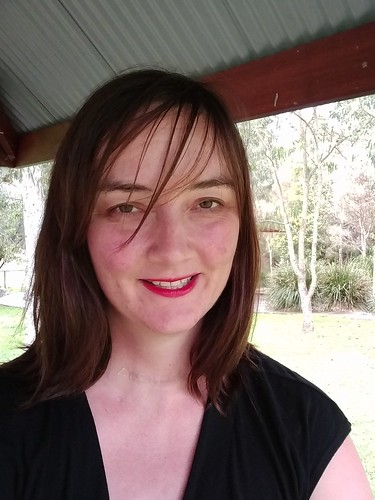
A selfie I’m pretty happy with:

Mary

I was still taping the thyroidectomy scar at the time; it’s more purple than it looks there.

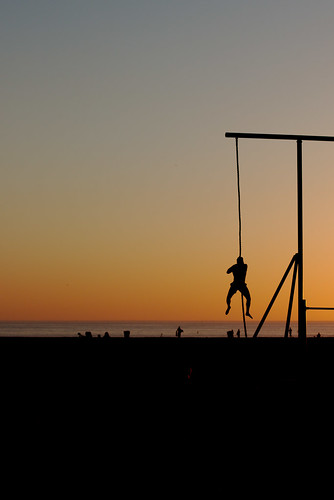
Someone climbs a rope, hands-only, as the sun sets over Santa Monica beach:

Rope climb

Three pleasures of 2016

1. I did do the intermediate run on skis I wanted. The very first one was the result of a misunderstanding; my skiing buddy thought I’d done intermediate runs in Australia and therefore after warming up could do one at Heavenly. Instead it was a first. The day went downhill (ha) after part of the resort was shut due to wind, and we missed lunch, but the cold grey morning was lovely.

2. Being taken to the ward after my thyroidectomy and having Andrew smile at me and squeeze my hand during the brief moments I was able to be awake for that afternoon.

3. The feeling of my hair swishing on my neck now that it has grown long enough.

Three news stories from 2016

Putin, I think? I’ve talked enough about the US. So: Putin, Aleppo, Brexit.

This is not fine.

You have to be a better and stronger person than I am to find something else to say.

Three sensations from 2016

1. “Koala” snuggles with my daughter, who is not as demonstrative as her older brother, except when she curls firmly into me to avoid anything or anyone she doesn’t like. Or when she’s ready for bed. Fierce sleepy marsupials are about right.

2. The taste of Haigh’s chocolates on several occasions: I bought them for myself for both cancer treatments, and when I left my job mid-year (between treatments). I remember the sweetness of the cremes, so sweet it hurts, but what I recommend is the truffles.

3. The taste of lemon sherbet boiled sweets. I went through a bag of them on medical advice during the radioactive iodine treatment; the I131 also gathers in the salivary glands and gives them mild radiation burns. Getting it excreted is the main fix, hence sour things.

Three sadnesses of 2016

1. A number of serious illnesses that aren’t mine, so aren’t mine to talk about.

2. Speaking of illnesses, but that are, or were, mine, the morning before a surgery is always a terrible time for me.

3. I actively chose to switch jobs again this year, but it was really hard and sad.

Three plans for 2017

1. I’ve started cycling in the last few months of this year. It’s a nice ride just shy of 4km with enough hills to get some exercise and a long bridge ride. In 2017 our ongoing ridiculous childcare situation will be improved, and I’m hoping riding three or four days a week will be my normal thing.

2. A peaceful week-long holiday with Andrew and the kids at Lake Macquarie. I find skiing hard work, so this will be only the second relaxing holiday we’ve all had together in the three years since my daughter was born.

3. As little travel as I can get away with. I’d love to clock up six months without a boarding pass.

Three hopes for 2017

This year, a very close cousin of “three fears”.

1. I hope my strong and wise friends are here and fighting and see something good growing from their hard work and their fear.

2. I hope it’s still possible to work for US headquartered employers in my industry without rapidly worsening complicity in human rights abuses.

3. I hope for at least one night out together with my husband that isn’t “last night before I go away for work” or “last night before I’m admitted to hospital again”.

Poem transcript

Transcript of the poem by Saladin Ahmed:

How do you talk to your kids?

Spit out the scorpions
Spit out the cyanide
Fill your mouth with thorny
flowers

Sit and hold their hands
Sit staring at their
superhero posters
Explain that villains win
sometimes

Tell them no one can tear
apart their family

Even if it’s a lie

Tell them that no one can take
away their home

Even if it’s a lie

Tell them you will keep them
safe
Even if you can’t

Teach your daughter to throw
a punch if she has to
Teach your son to cry if he
has to

Give them knives
Give them the sturdiest wax
you can find

Teach them to make candles

—Saladin Ahmed, buzzfeednews/reader

End of year prompts

I came up with my end of year prompts in 2014, feel free to use them yourself.

Previous years: 2014, 2015.

Superhumanised methyl: an infallible process for naming things

“I’m no good at names” said pretty much everyone I’ve ever founded and named a project with. Of course you aren’t because how often does one found and name a project? It’s a learned skill. You’ll get better at naming things as you name more things.

I’ve been following the same naming process since we named the Ada Initiative and it’s worked well several times; we came up with a name that we liked and the project didn’t split up over the issue of naming. I thus feel like it’s ready for public release and declaration of infallibility.

What are you trying to name?

Get down a short description of the thing you are trying to name: a two sentence summary, a mission statement, or similar. Eg: “a group blog for people who both knit and crochet”, “a future multinational oil company” or “a street festival”.

This may sound really obvious — why would you be naming something before you know what it is? — but in fact often you have to name things before almost anything else happens, because the name will need to go in your domain, in your incorporation paperwork, in your Twitter handle and so on. Often the need for a name arrives simultaneously with the need for a mission statement; get a short summary down as you currently understand your project.

Consider the obvious

I tend to lean to names that are fairly abstract, because I want to avoid asserting a particular kind of authority for a new project. For example, the Ada Initiative was not named “the Women in Open Source Initiative” for the reason that we weren’t intending to be an umbrella group or a one-stop-shop. Separately, abstract names are apparently easier to establish as a trademark (of course, if trademarkability is an important consideration for you, involve an intellectual property lawyer in your naming process).

But that said, it’s worth considering if you should be “the Winter Street Fair” or “the Crafters Blog” or “Oil, Incorporated” before you disappear into the web of name possibilities.

Assuming you’ve decided not to go with a descriptive name, it’s time to…

Come up with sources of metaphors

This is the part where I personally get stuck on “but I’m terrible at coming up with metaphors”. But again, you don’t have to do this cold. Think about:

  • your field: tools and technologies, sources of meaning and difference and status within it (quality, skill, design, distinctiveness, price, reliability, longevity, sub-cultural elements…)
  • history: early figures in the field/region, early tools and technologies, important places and their names
  • related fields and their tools and technologies, important places and so on
  • natural phenomena are very established metaphors: weather for energy/change, fire for destruction/renewal, wilderness (and space) for adventurousness, water for soothing/endurance/relentlessness

Your craft blog: historical crafters, historical technologies (eg the names of early looms), current technologies, colours, stitches, patterns, garments.

Your street festival: historical residents of the area, earlier names for the locality, street names, seasons and weather, local wares.

Your oil company: earth, power… varieties of hats? Pollution? Seriously, don’t get me to name your oil company.

Quite a lot of fields have a well-established metaphor, eg, “cloud” for computer servers hosted by other people (and earlier, for the wider Internet in general, often depicted as a cloud in diagrams). Add this and related metaphors to your sources of metaphor.

Create a list of possible names or part names.

Now you have your sources of metaphor, use them to come up with specific possible names. This is brainstorming with reference materials. I use either a thesaurus or Wikipedia to get down as many ideas as possible.

Valerie wanted to name the Ada Initiative for Ada Lovelace, but the second part of the name came from thinking about wanting to capture, essentially, activity, and then following networks of words related to activity, forward motion, and change around a thesaurus. I’ve named other things by working my way through Wikipedia categories and lists.

If I was naming a provider of cloud computing services and wanted to stick close to the cloud metaphor, this is some of what I’d end up with from this process:

  • from thesauruses, based on “cloud”: steam, vapour, nebula, dapple(d), overcast
  • from Wikipedia, poking around cloud and weather categories: hector, cloudburst, flanking line, cumulus, stratus, mushroom

If I was going to be going for high reliability, I might go with ground/grounded as a metaphor instead, and some of the following might end up on the list:

  • from thesauruses, based on “earth”: clay, loam, pottery, cave, nest, field, holding, home, soil, tillage
  • from Wikipedia, looking around soil-related categories: brown earth, mire, loam, terra, peat

This is the long-listing phase: Put down every possible name that you vaguely like. Don’t be bound by your sources of metaphor, consider adding words you’ve always liked or cool words you find randomly flipping in a dictionary, fragments of your personal motto, abandoned names from previous projects. There’s already a ton of filtering going on here (eg, it turns out there’s a whole lot of trademarked soil products ending in -sol I didn’t include) but don’t do it systematically yet. Just avoid writing down stuff you hate.

If I was looking for/open to a two word phrase, I’d both allow them here (“red soil”) and do the same process for the second half of a name (“initiative”).

You can cautiously branch out into other languages. I tend to end up at Latin pretty quickly because there’s less cultural appropriation issues than with many living languages, and English speakers can usually figure out a plausible pronunciation of the name.

Whittle down the list.

It’s time for the short-listing phase. You can do this by gut: get rid of “meh” names. This is also a good time to add a bunch of practical constraints to help cut it down. For example:

  • does it have connotations you don’t intend? (eg “girls” for a women’s group will at some point cause people to start asking questions about the age range of members)
  • how formal is the name, compared with your intentions?
  • is it striking and memorable?
  • is the origin story of the name entertaining and OK to share? (you may be asked for it)
  • is an appropriate domain name/Twitter handle/your landgrab here available?
  • is it easy to spell? (joke is on me: it took me ages to learn to type “initiative” reliably)
  • will people understand it when you say it over the phone? (trick question, this is never true, barring naming your new project “John” — or wait, was that “Jon”? — but if you keep it short at least spelling it out won’t be time consuming)
  • do you like the acronym or short form? does it have its own spelling or confusion issues? (the Ada Initiative used to receive a fair bit of correspondence concerning the Americans with Disabilities Act and the American Diabetes Association, both known as ADA)
  • is there a similar trademark?
  • is it a “style” of name widespread in your market (eg, two word names are common, or single syllables are common, or naming things in memory of is common) and do you want to nod to that or depart from it?
  • is it a word in other languages, and if so, what does it mean?
  • are you borrowing a term from a dispossessed or disadvantaged group? (eg using an Indigenous word for a non-Indigenous-centered thing in Australia)

The specific constraints will vary: I’ve rarely had to care about trademarks so far, and the fewer things I have to spell out over the phone the better. You’ll probably refine your criteria as you strike individual names.

Often at the end of this process you’ll be down to five names or less. One catch: you are pretty tired and bored by this point. Be sure you get rid of any name you in fact hate, no matter how good it seems by your criteria, because otherwise you risk choosing it out of exhaustion or inertia. In a group setting, you will need to risk a bit of conflict by trying to draw out “does anyone actually just hate any of these?”

The last one

Sometimes if you are lucky, you only have one candidate left, or else one that is just the best by far. You have a winner!

Otherwise, this is tricky. You’ve looked at the names so long you’ve started to lose any sense of their goodness. However, the whole painful preceeding process means that something that has made it this far is likely to be a perfectly fine name that you will grow attached to over time. Possibilities for making the final decision include: allowing no-reason vetos, votes, tasking one person with making the call. It can be worth taking an hour or two imagining the name in use: on your posters, your business card, your graffiti.

Postscript: what’s up with “superhumanised methyl”? Super? Human? Ised? Methyl? Well, I knew I needed to perform flawlessly in naming this entry, and so I did not do any of the above process but instead ran my random word generator a bunch of times until I got something I vaguely liked. However, in the spirit of full disclosure: I did change it to Commonwealth spelling.

Creative Commons License
Superhumanised methyl: an infallible process for naming things by Mary Gardiner is licensed under a Creative Commons Attribution-ShareAlike 4.0 International License.

Learning more about a remote working position

This entry is part 1 of 3 in the series Remote work

I’m in the process of wrapping up a long period of working remotely at least part-time from home, beginning in 2006 when I enrolled in a PhD program and continuing through my time at the Ada Initiative and at Stripe to this year.

My take on working remotely in future is really “it depends on the details” (and likely different details for different organizations). To that end, I contributed some suggested questions you could ask to Hypothesis’s Working remotely guide, which they’ve incorporated in a slightly edited form. Here’s my original questions; I’ve also added a few more at my end after some feedback from Andrew (himself a veteran of around seven years of remote work).

Introduction

Before you start working remotely at a new organization, you should explore how they structure remote working and if there are any expectations mismatches between you and the organization. A particular remote job may or may not be a match for a particular remote worker.

Important: I don’t think there is any one right answer to any of these questions. It’s a question of fit between your working style, the position itself, and the relationship of the position to the rest of the organization. But the answers are worth knowing so that you can evaluate your fit and make plans for effective remote working.

Sources of information

This entry has a lot of questions, too many for a “do you have any questions?” section of an interview. But you can use other sources of information to get most answers, especially about organization-wide questions:

  • the job description, and descriptions of similar roles
  • the organization’s website, particularly the About and Careers pages
  • the section of the employee handbook dealing with remote work
  • the LinkedIn pages or websites of your future manager and colleagues
  • longer, separate, conversations with your recruiter or hiring manager
  • your offer conversation or letter, or your contract

Some questions you also may only need to ask if you hear of concrete plans to make a change to the organization (eg, you learn that a new office is about to open near you).

Questions

How are you remote and who are you remote from? This post is using ‘remote’ to mean something like “most days, you are not in face to face contact with any colleagues.” But you should be aware of the details: will you be working without in person contact with teammates or with the wider organization almost all of the time? Do you have any colleagues in your team or your wider organization in your city or region, or who regularly visit? Will you work on any joint projects with them? Will you be able or be expected to sometimes work with them in person even if there’s not a permanent office space?

Separately, is in-person contact with vendors or customers part of the job?

Is your immediate team remote? Is your manager remote? Being a remote member of a team that is all working remotely from each other is different from a team which is mostly located in an office with each other. Likewise, being managed by someone who is in an office has some potential advantages (for example, access to information circulating through verbal grapevines, being able to access answers from colleagues for you quickly), as does being managed by someone who is themselves remote (a direct appreciation for experiences specific to remote workers, a personal interest in advocating for them).

How many remote workers are there at the rest of the organization? What percentage of teams you will work closely with are working remotely, and what percentage of employees overall are working remotely? Working as one of very few remote workers for an organization where most employees are in an office together is different from a mostly or entirely remote-working organization.

What’s the future of remote work at the organization? If the organization is mostly or entirely remote, are there any plans to change that? If the organization is mostly office-based, are there any plans to change that? If an office is likely to be founded in your city or region soon, will you be able or be expected to work from it?

You may be considering a job on the understanding that the remote work will be of very short duration (eg, an office is opening in your city in two months time). Is there any chance the time will be longer, and are you OK with that?

What is your manager’s approach to remote workers? How frequently will they speak with you and through what media? Will they expect you to travel to them? Will they sometimes travel to you? Have they managed remote workers before?

How long have there been remote workers for? Is the organization new to having remote workers or has it had remote workers for a long time and bedded down a remote working style?

What is the remote working culture like? Is most collaboration over email, text chat, phone, video conf, or some other means? Are there watercooler-equivalents like social IRC channels or video chats? How active are they? Are remote workers mainly working from home or from co-working spaces? Are there occasional team gatherings for remote workers to meet colleagues in person and are they optional or compulsory?

How flexible are the hours? Not all remote work has flexible hours; you may have mandated work hours, or core hours, or shifts, as in any other role.

Are the remote workers spread across multiple timezones? If so, are your team and closest collagues in your timezone or another one? Are you expected to adapt your working hours to overlap better with your colleagues? How are meetings and other commitments scheduled across timezones? Do they rotate through timezones or are they always held in a certain timezone? Are you ever expected to attend meetings well outside your working hours, and if so, how often is this expected and do your colleagues in other timezones face the same expectations?

What are the benefits for remote workers? Will the organization reimburse any of your remote working expenses, such as membership of a co-working space, home office furniture, or your home Internet connection costs? If you’re working in a different country from most of your colleagues, will you get equivalent benefits to your colleagues (eg, health insurance coverage)?

What are the travel expectations for remote workers? Are you expected to travel to headquarters or other offices or customers, and if so, how often and for how long? What are the travel policies and allowances for remote workers? How do these travel expectations compare to those of non-remote colleagues?

Sometimes you will be remote from an organization with an office or even headquarters in the same city as you. Will you be able or expected to visit the office? How often? Will there be resources for you (eg, hot desks, meal provisioning)?

What are the career progression possibilities for remote workers? As a remote worker in a partly non-remote organization, could you move into more senior positions over time, such as team leader, middle manager, or executive? Could you move into other teams in the organization, and if so, which ones? Are there some roles that are closed to remote workers? Match these answers to your own career goals.

What’s the training process like? Must you or can you spend a period of time in an office or visiting a colleague for training? Must you or can you do your training remotely using documentation, videos and similar? Will a trainer or colleague have some time assigned to remotely train you?

Is there support for first-time remote workers? If you haven’t worked remotely before, will the organization support you in learning how to work remotely, and if so, how?

See also

A very partial list of resources, focussing on individual remote workers and their experiences and strategies:

Creative Commons License
Learning more about a remote working position by Mary Gardiner is licensed under a Creative Commons Attribution-ShareAlike 4.0 International License.